The short answer
Taurine has not been shown to slow aging in people. That is the honest one sentence version, and everything else in this article is the evidence behind it.
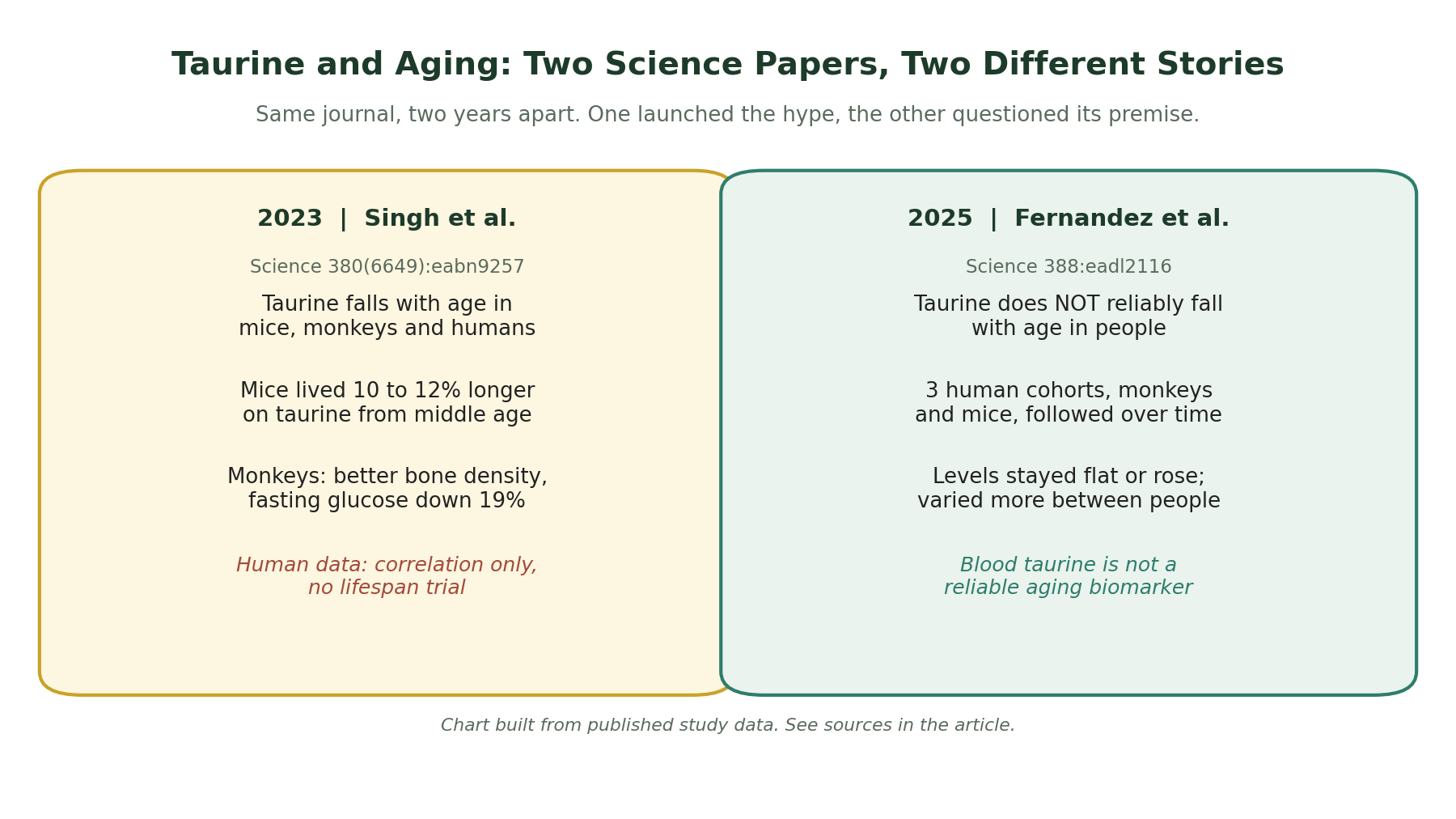
In 2023, a study in Science reported that taurine supplements extended median lifespan in mice by 10 to 12% and improved health markers in middle-aged monkeys. Supplement sales followed fast. Then in 2025, a second study in the same journal, from researchers at the US National Institute on Aging, tested the idea the first study rested on, that taurine levels fall as we age, and found they do not. In 3 human cohorts, plus monkeys and mice, blood taurine stayed flat or rose with age.
So we have one of the clearest before and after stories in longevity science: a spectacular animal result, and a careful human follow-up that undercuts its premise. What survives the collision is real but modest. Pooled human trials show taurine lowers blood pressure by about 4 mmHg and improves a few metabolic markers. No trial has shown it slows aging, extends life, or changes a biological age score in people. One trial designed to test exactly that question finished in 2025 and has not posted results.
What taurine is, and what it is not
Taurine is a sulfur-containing amino sulfonic acid found in almost every tissue, most richly in the heart, brain, retina, and muscle. Your body makes it from the amino acids cysteine and methionine, and you also get it from food, mostly shellfish, dark meat, and fish. Scallops, mussels, and clams are among the richest sources. Average dietary intake in a Japanese study of adults over 40 was about 208 mg a day, far below supplement doses.
Taurine is not a stimulant, and it contains no caffeine. The lift you feel from an energy drink is the caffeine, not the roughly 1 g of taurine in the can. That confusion is everywhere in taurine marketing, and it is worth clearing up first: taurine does not wake you up.
Inside cells, taurine helps regulate calcium, supports bile acid formation, acts as an antioxidant, and stabilizes cell membranes. Those roles are real and well documented. The open question is whether topping up taurine in an otherwise healthy adult changes how fast they age. That is a much narrower claim than "taurine is important for health," and the two should not be confused.
The 2023 study that started the hype
The paper that put taurine on every longevity list was "Taurine deficiency as a driver of aging," published in Science in June 2023 by Parminder Singh, Vijay Yadav, and colleagues at Columbia University and the National Institute of Immunology in New Delhi. It was a large, multi-species effort, and it is worth stating what it actually found, because most coverage did not.
First, the team reported that circulating taurine falls with age. In their samples, monkey serum taurine at 15 years was 85% lower than at 5 years, and blood taurine in elderly humans was more than 80% lower than in younger people.
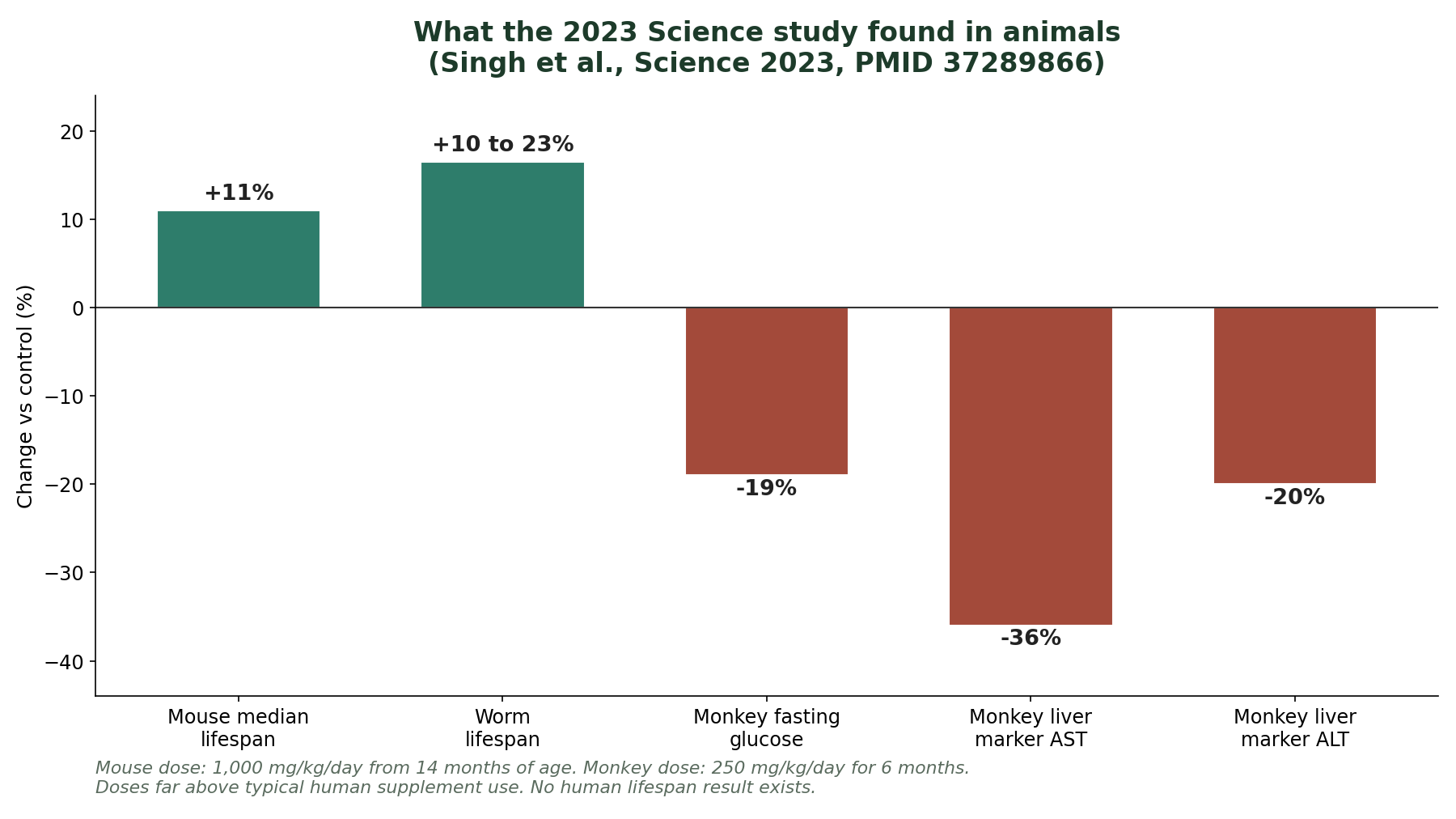
Second, they gave middle-aged mice taurine every day for the rest of their lives, at 1,000 mg per kilogram of body weight. Median lifespan rose 10 to 12%, and life expectancy at 28 months rose 18 to 25%. The taurine-fed mice also had better bone strength, muscle endurance, glucose control, and memory measures, and fewer markers of cellular senescence. In worms, taurine extended lifespan by 10 to 23%.
Third, they gave 15-year-old rhesus monkeys, roughly 45 to 50 in human years, 250 mg per kilogram a day for 6 months. Bone density in the spine and leg increased, fasting blood glucose fell 19%, and the liver-damage markers AST and ALT fell about 36% and 20%.
Fourth, in people, the paper showed only associations: lower blood taurine went with obesity, type 2 diabetes, and other age-related conditions. No human in the study was given taurine and followed to see whether they aged more slowly.
The dose matters here. A mouse getting 1,000 mg per kilogram a day is the equivalent of about 70 g a day for a 70 kg person, scaled directly, and even with the usual allometric adjustment between species, it is far above the 1 to 3 g a day people take as a supplement. The monkey dose of 250 mg per kilogram is also far above human supplement doses. The lead author said at the time that a human clinical trial would be needed to confirm whether taurine does the same thing in people.
The 2025 study that complicated the story
Two years later, researchers at the National Institute on Aging tested the central premise: that taurine declines with age. The team, led by Maria Emilia Fernandez with Rafael de Cabo and Luigi Ferrucci, published "Is taurine an aging biomarker?" in Science in June 2025.
Their design was stronger than the 2023 paper's human data in one key way. They measured circulating taurine in 3 geographically distinct human cohorts, including the Baltimore Longitudinal Study of Aging, which followed adults from 26 to 100 years old, plus rhesus monkeys and mice. Crucially, they combined cross-sectional samples, different people at different ages, with longitudinal samples, the same people measured repeatedly over years.
Their conclusion: taurine increased or remained unchanged with age in all of these groups. Differences between measurements in the same person were often bigger than any change linked to age, and taurine levels were inconsistently tied to muscle strength, body weight, and other health measures. They concluded that blood taurine is not a reliable biomarker of aging, and that falling taurine is not a universal feature of aging.
Independent researchers agreed. Joseph Baur, a physiologist at the University of Pennsylvania, noted that the main takeaway is that a decline in taurine is not a universal feature of aging. Mark Mattson, an aging researcher at Johns Hopkins, said the breadth of the data was convincing and that blood taurine levels cannot be used as a biomarker of aging.
A separate 2025 analysis in the journal Aging Cell pointed in the same direction. In 137 men aged 20 to 93, researchers found no link between taurine status and age, strength, or muscle function. Lower taurine status did not consistently track with functional decline in older adults.
None of this proves taurine supplements do nothing in people. It does something narrower and important: it removes the deficiency story that made the 2023 result feel directly relevant to older adults. If taurine does not fall with age, then "topping it back up" is not an obvious fix for aging, and any benefit would need a different explanation.
What human trials actually show
There are no human lifespan or aging-rate trials of taurine with published results. What exists is a set of smaller, shorter trials on blood pressure, blood sugar, lipids, and exercise. Here is what they show, with the numbers.
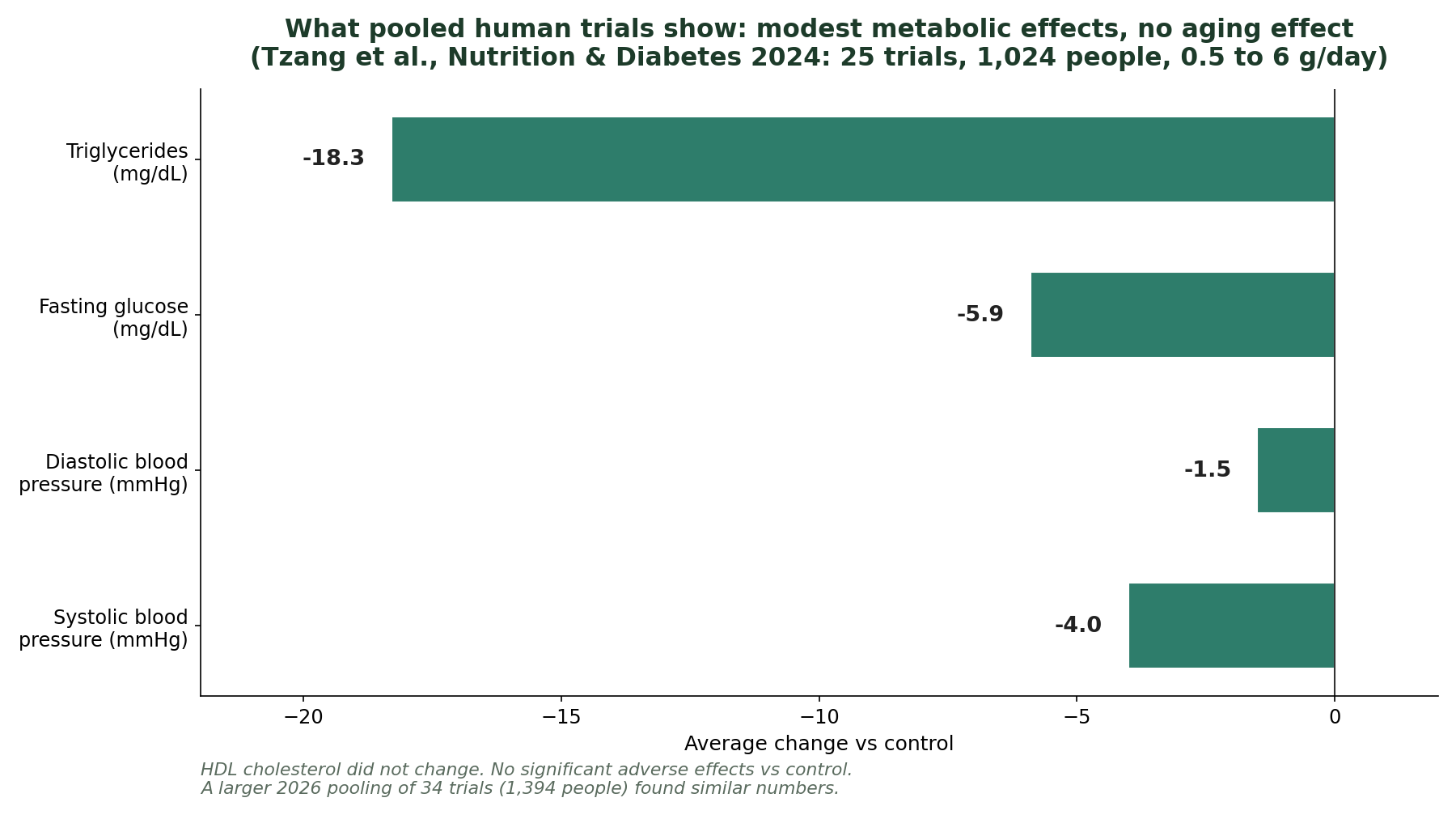
Blood pressure and metabolic markers: modest, real, consistent. A 2024 meta-analysis in Nutrition and Diabetes pooled 25 randomized trials with 1,024 people, doses from 0.5 to 6 g a day for 5 to 365 days. Taurine lowered systolic blood pressure by about 4 mmHg, diastolic by about 1.5 mmHg, fasting glucose by about 5.9 mg/dL, and triglycerides by about 18 mg/dL. HDL cholesterol did not change, and there were no significant adverse effects compared with control groups.
A larger 2026 pooling of 34 randomized trials with 1,394 people found similar numbers: systolic pressure down 4.38 mmHg, diastolic down 2.54 mmHg, fasting glucose down 5.90 mg/dL, HbA1c down 0.21%, triglycerides down 14.42 mg/dL, total cholesterol down 12.41 mg/dL, and LDL down 5.08 mg/dL. The dose-response analysis in that pooling identified 1.5 to 3.0 g a day as the most effective range.
The best single trial was a 2016 randomized study of 120 prehypertensive Chinese adults given 1.6 g a day for 12 weeks. Systolic pressure fell 7.2 mmHg against placebo, and diastolic fell 4.7 mmHg. Effects were larger in trials that enrolled people with high blood pressure and ran at least 8 weeks. In people with normal blood pressure, the effect was smaller or absent.
The American Heart Association's 2025 statement on complementary therapies for hypertension gave taurine a Class IIb rating, meaning it may be considered, with Level B-R evidence, in people with high blood pressure already on lifestyle therapy. That is a fair summary of where the human evidence is strongest: blood pressure, not lifespan.
Aging markers: one small trial, one unfinished one. The aging-specific trial most often cited is a Brazilian study of 24 women aged 55 to 70, who took 1.5 g of taurine or placebo for 16 weeks. Taurine raised blood taurine and the antioxidant enzyme superoxide dismutase, and it prevented a rise in a marker of oxidative damage that was seen with placebo. That is a blood marker result in 24 people, not evidence of slower aging.
The trial designed to answer the aging question directly is called TauAge (ClinicalTrials.gov NCT06613542). It gave 90 adults aged 55 to 75 either 4 g of taurine a day or placebo for 6 months, with biological-age measures as an outcome. It was listed as completed in November 2025, but no results had been posted as of November 2026. Until those results appear, there is no human aging trial to point to, in either direction.
Exercise: small effects, low certainty. A 2025 meta-analysis in the Scandinavian Journal of Medicine and Science in Sports pooled 23 randomized trials with 308 people who took a single dose of taurine before exercise. It found small-to-moderate improvements in overall performance, with an effect size of 0.25, and rated the certainty of that evidence as low to very low, because the studies varied widely and carried a real risk of bias. There was no dose-response relationship in the commonly used 1 to 6 g range, and taking it about 1 hour before exercise looked most favorable. Pooled results did not show a meaningful effect on VO2 max or on how hard exercise felt.
Dietary taurine and muscle strength: an interesting 8-year signal. A 2024 study in Frontiers in Nutrition followed community-dwelling Japanese adults aged 40 and older for 8 years. Higher dietary taurine intake was linked to a slower decline in knee extension muscle strength, with no relationship to the other 3 fitness measures tested. This is observational, and the average intake was only about 208 mg a day from food, but it is the kind of long-term human data the field needs more of.
Doses and safety
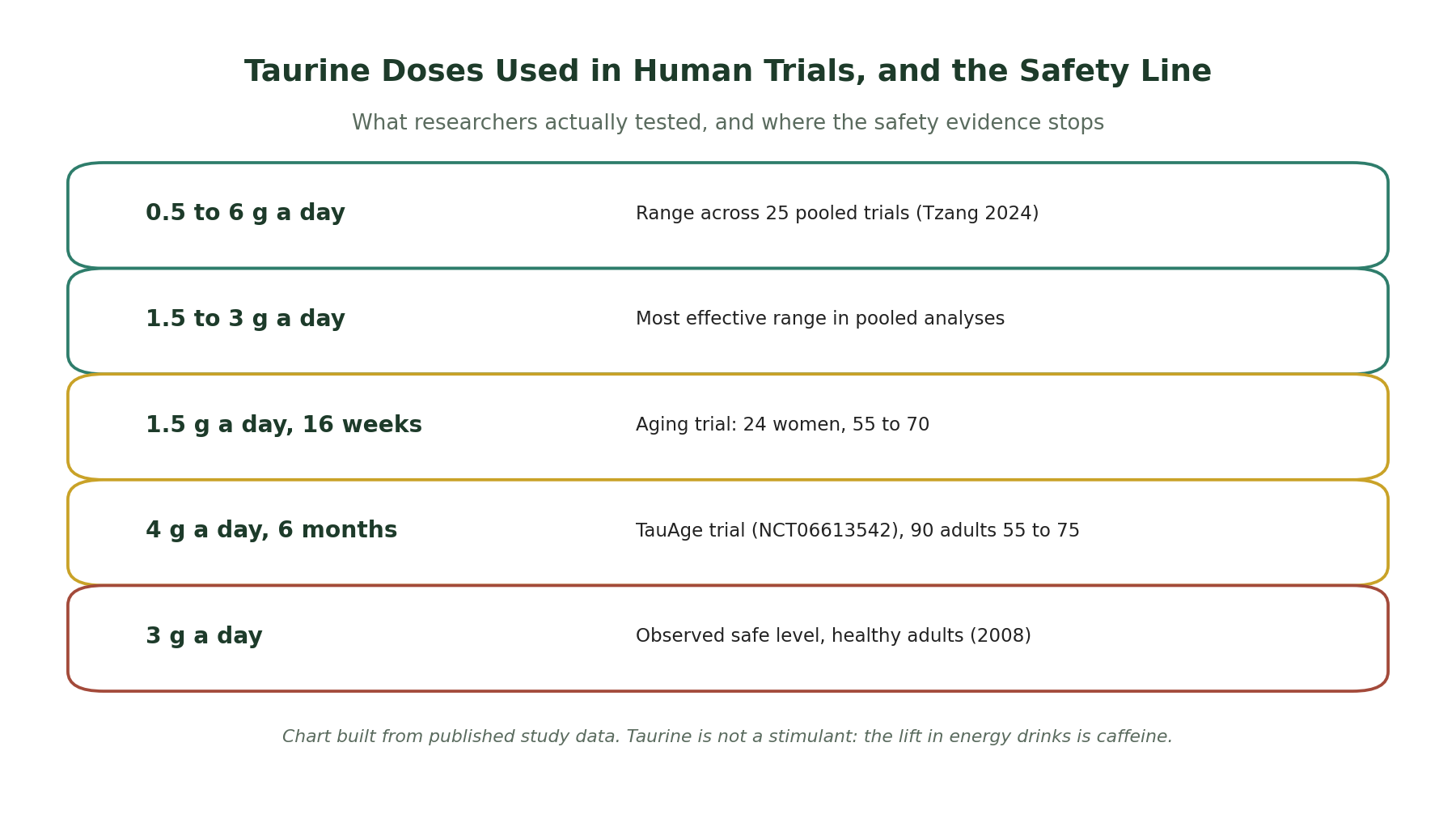
Human trials have used 0.5 to 6 g a day. The pooled analyses point to 1.5 to 3 g a day as the range where metabolic effects show up, and the aging-focused trials used 1.5 g and 4 g.
A safety review by Shao and Hathcock in 2008 identified 3 g a day as the observed safe level for healthy adults, meaning the evidence for no adverse effects is strong up to that intake. Higher intakes have been tested without adverse effects, but the data are not enough for a confident conclusion about long-term safety above 3 g a day. Across the pooled trials, there were no significant adverse effects compared with control groups, and the most commonly reported side effects are mild stomach upset.
That safety record is reassuring but narrow. It comes mostly from trials lasting weeks to a few months, not from years of daily use, and not from the very high doses used in the mouse study. Safety at 1 to 3 g a day for a few months is not the same as safety at any dose for years.
Who should be careful
Taurine is generally well tolerated, but a few groups should talk to a clinician first. People taking blood pressure medication should know taurine can lower blood pressure further, so home monitoring matters if you try it. People with kidney disease should be cautious, since taurine is cleared through the kidneys and most safety data comes from healthy adults. There is not enough data to call taurine safe in pregnancy or breastfeeding, so it is best avoided there. And energy drinks deserve their own warning: the risk is not the taurine, it is the caffeine and sugar in the same can, which can raise blood pressure and heart rate on their own.
Taurine is not a substitute for blood pressure medication, diabetes treatment, exercise, or sleep. The blood pressure effect, about 4 mmHg systolic in pooled trials, is real but small next to what medication, weight loss, or regular exercise can do.
My verdict
Taurine is a case study in how longevity science actually works, and why I write these articles the way I do. A 2023 paper in Science gave us a real, exciting animal result: mice lived 10 to 12% longer. The supplement industry ran with it. Then a 2025 paper in the same journal checked the premise in people and found it does not hold: blood taurine does not fall with age.
Taurine is not the only molecule in this position. Molecular hydrogen has the same shape of evidence: interesting mechanisms, small human effects, and no aging trial, which I wrote about in my Cymbiotika Molecular Hydrogen review. The same pattern shows up with NAD+ boosters, where the human evidence is mostly about blood markers, not lifespan: Cymbiotika Liposomal NAD+ review.
What is left is honest and useful, just smaller than the headlines. Taurine modestly lowers blood pressure and improves a few metabolic markers in pooled human trials, with the best dose range looking like 1.5 to 3 g a day and a good safety record up to 3 g a day. It may help exercise performance a little, with low certainty. It has not been shown to slow aging or extend life in people, and the one trial built to test that question has finished without posting results.
If you already take taurine for blood pressure support, alongside everything else your clinician recommends, the evidence supports that as a reasonable choice. If you are taking it because a mouse study promised a longer life, that promise has not survived contact with human data. I am watching the TauAge results, and if they show a real effect on biological age, I will update this article and say so plainly.
Sources
- Singh P, Gollapalli K, Mangiola S, et al. Taurine deficiency as a driver of aging. Science. 2023;380(6649):eabn9257. PMID 37289866.
- Fernandez ME, et al. Is taurine an aging biomarker? Science. 2025;388:eadl2116. PMID 40472098.
- Marcangeli V, et al. Aging Cell. 2025. Cross-sectional study of 137 men aged 20 to 93; no association between taurine status and age, strength, or muscle function.
- Tzang CC, et al. Taurine reduces the risk for metabolic syndrome: a systematic review and meta-analysis of randomized controlled trials. Nutrition and Diabetes. 2024;14:29. PMID 38755142.
- Effects of oral taurine supplementation on cardiometabolic risk factors: a meta-analysis of randomized clinical trials. Nutrition Reviews. 2026. 34 trials, 1,394 participants.
- Sun Q, Wang B, Li Y, et al. Taurine supplementation lowers blood pressure and improves vascular function in prehypertension: randomized, double-blind, placebo-controlled study. Hypertension. 2016. PMID 26781281.
- Deng, et al. Does one shot work? The acute impact of a single taurine dose on exercise performance: a meta-analytic review. Scandinavian Journal of Medicine and Science in Sports. 2025.
- Association of taurine intake with changes in physical fitness among community-dwelling middle-aged and older Japanese adults: an 8-year longitudinal study. Frontiers in Nutrition. 2024.
- Shao A, Hathcock JN. Risk assessment for the amino acids taurine, L-glutamine and L-arginine. Regulatory Toxicology and Pharmacology. 2008;50(3):376-399.
- ClinicalTrials.gov NCT06613542: Daily taurine for 6 months on biological age in adults 55 to 75 (TauAge).
FAQ
Does taurine slow aging in humans?
No trial has shown that. Taurine extended median lifespan by 10 to 12% in mice and 10 to 23% in worms in a 2023 Science study, but a 2025 Science study found blood taurine does not reliably fall with age in people, which weakens the idea that topping it up slows aging. The first human trial built to test taurine against biological age, TauAge, finished in 2025 and has not posted results.
Does taurine lower blood pressure?
Modestly, yes. A 2024 meta-analysis of 25 randomized trials with 1,024 people found systolic pressure about 4 mmHg lower and diastolic about 1.5 mmHg lower. A larger 2026 pooling of 34 trials found similar numbers. The effect is bigger in people who already have high blood pressure, and it is not a substitute for medication.
How much taurine do people take in trials?
Human trials have used 0.5 to 6 g a day. Pooled analyses point to 1.5 to 3 g a day as the most effective range for blood pressure and metabolic markers. A safety review identified 3 g a day as the observed safe level for healthy adults.
Is taurine in energy drinks the same as a taurine supplement?
The molecule is the same, but the context is not. An energy drink can contains about 1 g of taurine alongside caffeine and often sugar. Taurine is not a stimulant, so the lift from an energy drink is the caffeine. A plain taurine capsule will not wake you up.
Does taurine decline with age?
That depends on which study you read, and that disagreement is the point of this article. The 2023 Science study reported blood taurine more than 80% lower in elderly humans than in younger people. The 2025 Science study, which followed the same people over time in 3 cohorts, found taurine stayed flat or rose with age. A 2025 Aging Cell study of 137 men aged 20 to 93 also found no link between taurine and age.
Should I take taurine?
That is a decision for you and your clinician, especially if you take blood pressure medication or have kidney disease. The honest summary is that taurine has modest, real evidence for blood pressure and metabolic markers, a good safety record up to 3 g a day, and no evidence that it slows aging in people.
This article is for general information only and is not medical advice. It reports on published studies and does not recommend any supplement, dose, or treatment. Talk to your clinician before starting or changing any supplement, especially if you take blood pressure medication or have kidney disease.
Looking for tools that support healthy aging and recovery? Browse the current offers on our discount codes page. This article is for general information only and is not medical advice. It reports on a published study and does not recommend any supplement, dose, or treatment.