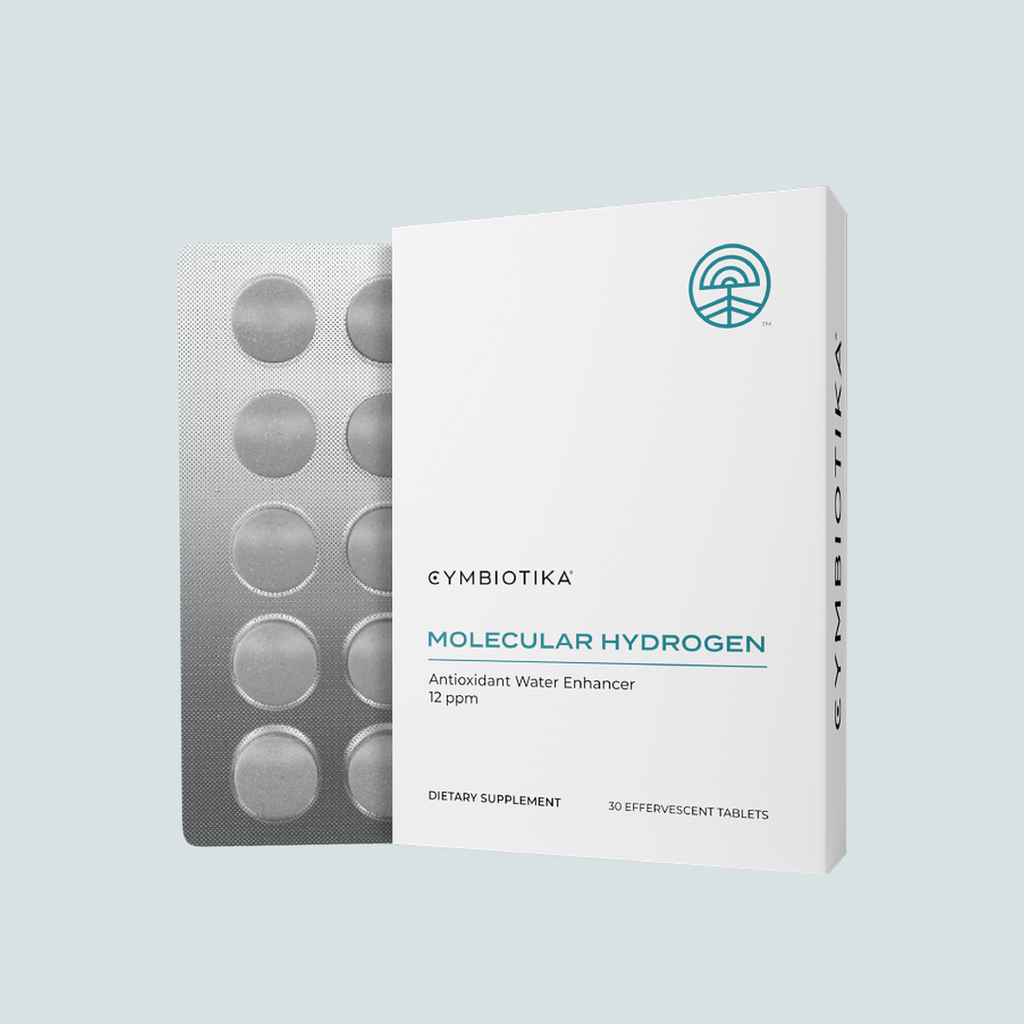
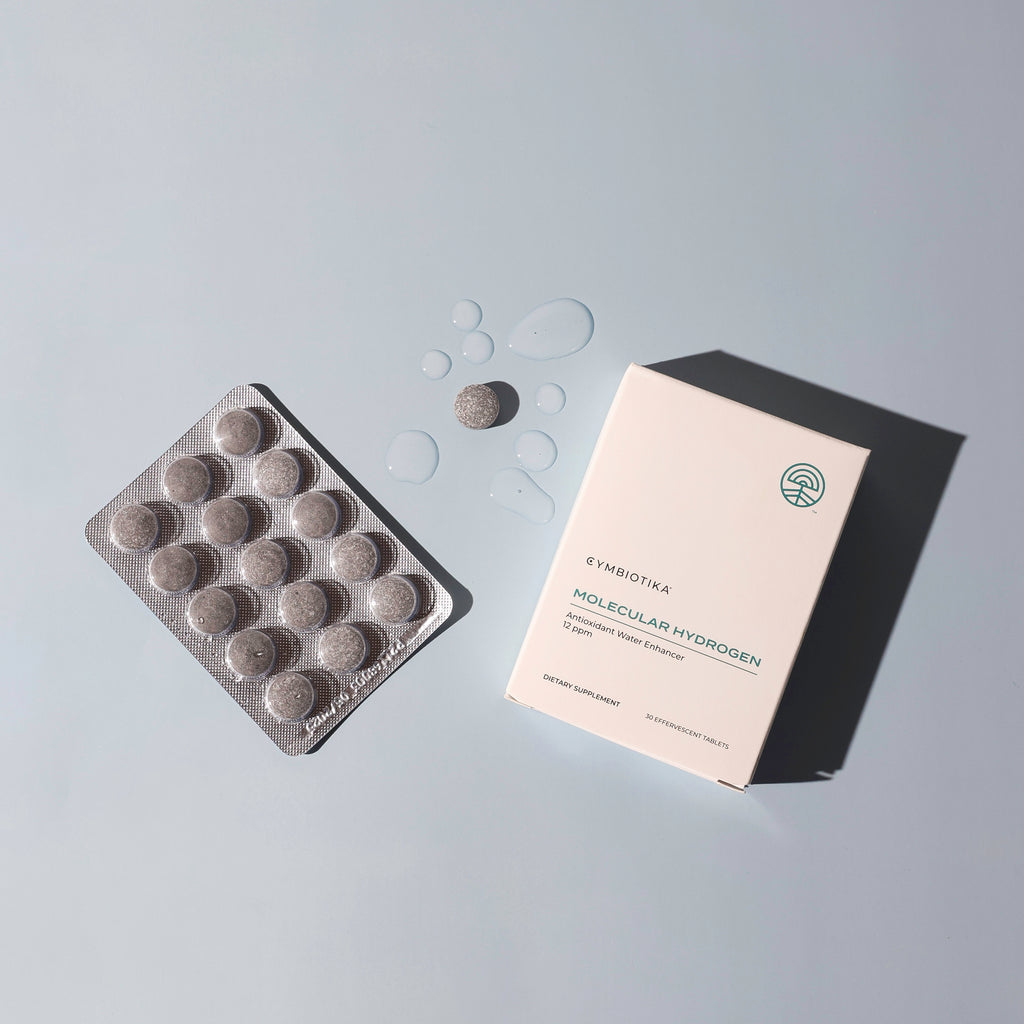
Cymbiotika's Molecular Hydrogen is a box of 30 effervescent tablets. Drop 1 in a glass of water, watch it fizz, drink it right away, and you have hydrogen water. The brand says it neutralizes harmful free radicals, reduces oxidative stress, and may improve athletic recovery. It costs $24 for a one-time box, or less on subscription, and it has a 4.9 out of 5 rating from more than 1,100 reviews.
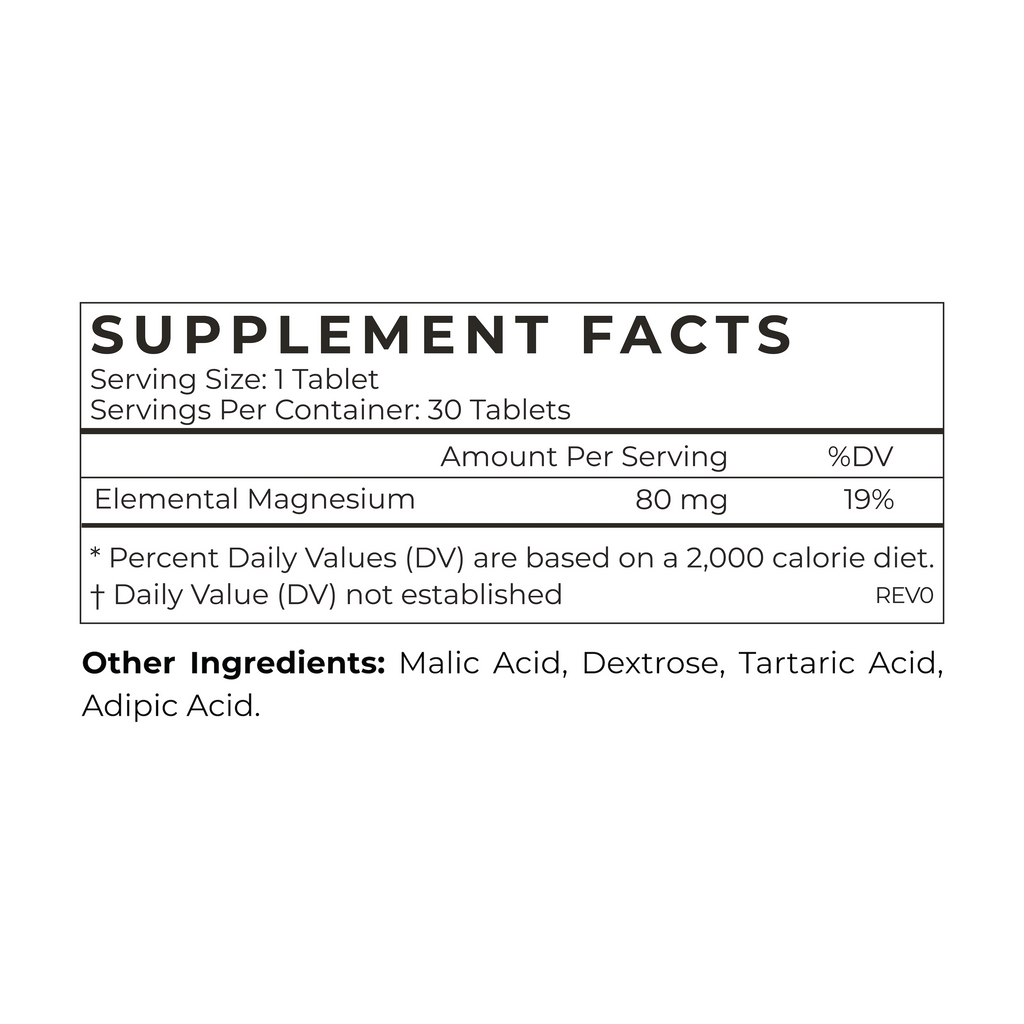
Here is the problem I found before I got past the label. The Supplement Facts panel lists 80 mg of elemental magnesium and 4 other ingredients. It never says how much hydrogen gas 1 tablet actually produces. No milligrams of H2, no parts per million, no concentration at all. Every study that found anything from hydrogen water used a known dose. Without that number, you cannot check whether this tablet matches the research, and neither can I. That dose gap is the honest center of this review.
Disclosure: I'm affiliated with Cymbiotika, but I only recommend things I can actually stand behind so here's my honest breakdown.
The short answer
Molecular hydrogen, H2, is a real molecule with a real mechanism. In lab studies it selectively neutralizes the most damaging free radicals and switches on the body's own antioxidant defenses. In people, the evidence is small and specific. The best pooled data we have, a 2024 meta-analysis of 27 publications with 597 healthy adults, found small improvements in lower limb explosive power and in how hard exercise felt, plus faster lactate clearance. It found no significant effect on VO2max, aerobic endurance, anaerobic endurance, or muscular strength. A 2026 meta-analysis of 13 randomized trials in 757 adults with overweight or obesity found total cholesterol about 6.7 mg/dL lower and LDL about 3.2 mg/dL lower, which the reviewers said is too small to matter for heart risk.
The largest and most careful human trial in the field, a 178-patient Parkinson's trial that ran 72 weeks, found no benefit at all. No published study has tested Cymbiotika's tablet itself.
So my verdict is this. The science is genuinely interesting and the short-term safety record looks clean. But the effects in people are small, limited to a few measures, and the dose in this product is undisclosed, so you are paying $0.64 to $0.80 a day for a tablet whose active ingredient you cannot verify. If the ritual appeals to you and the price feels fine, it is a reasonable experiment. It is not a longevity essential, and it is not a treatment for anything.
What Cymbiotika Molecular Hydrogen actually is
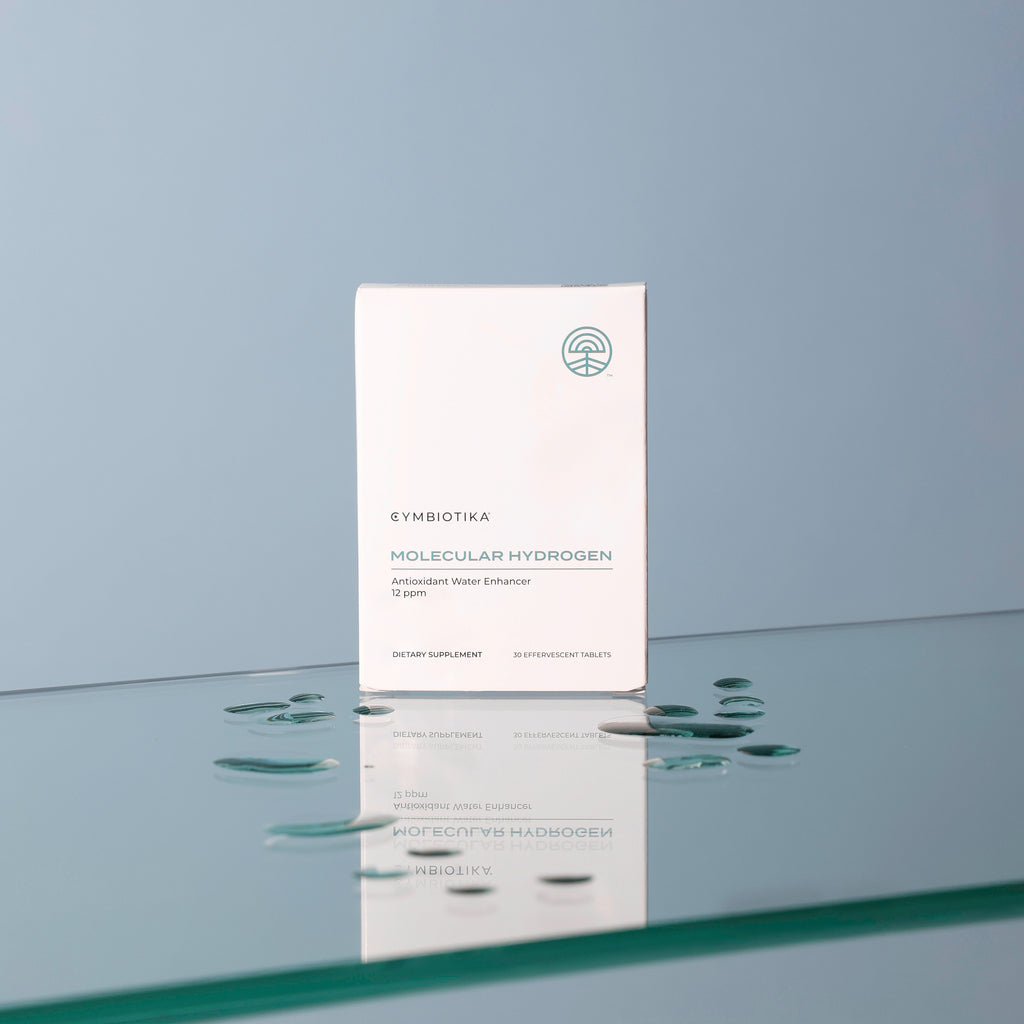
Each box holds 30 effervescent tablets, a 30-day supply at 1 tablet a day. You dissolve 1 tablet in room-temperature water and drink it immediately, ideally in the morning on an empty stomach. The tablet is not liposomal like most Cymbiotika products. It is a chemistry trick: elemental magnesium reacts with water and releases hydrogen gas, which dissolves into the water you drink.
The Supplement Facts panel lists 1 ingredient with a dose: elemental magnesium, 80 mg per tablet, 19% of the daily value. The other ingredients are malic acid, dextrose, tartaric acid, and adipic acid. Those acids drive the reaction that frees the hydrogen.
The price, verified on cymbiotika.com on Nov 16, 2026, is $32 list, $24 for a one-time purchase, $21.60 per box on a 30-day subscription, and $19.20 per box on a 90-day subscription. That works out to $0.80 a day one-time, $0.72 a day on the monthly plan, and $0.64 a day on the 90-day plan. Shipping is free, and there is a 60-day money-back guarantee. The product page shows a 4.9 out of 5 rating from 1,154 reviews. There is no discount code for Cymbiotika. You can shop through my affiliate link here: https://shop.cymbiotika.com/SFVM9DY9.
One thing worth noting: 80 mg of magnesium is a small dose, only 19% of the daily value, so this is not a magnesium supplement in any meaningful sense. My review of Cymbiotika's actual magnesium product is here: /blog/cymbiotika-liposomal-magnesium-complex-review.
The research gap: the dose is missing from the label
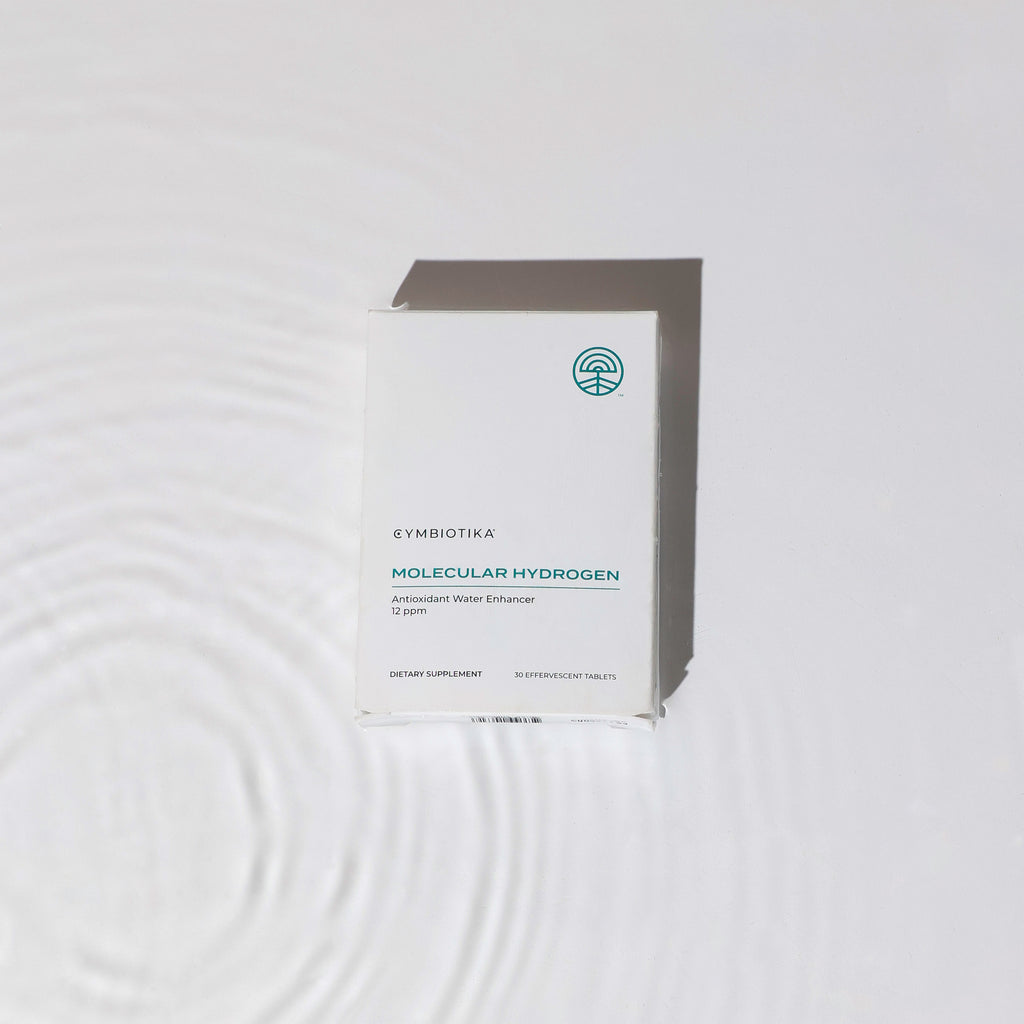
This is the gap the whole category has, and this product is a clear example of it. Hydrogen water research is dose research. The trials that reported effects used water with a measured hydrogen concentration, usually around 1 to 1.6 parts per million, or a measured daily dose, often around 5 to 15 mg of H2 per day. The dose is always stated, because hydrogen escapes from water quickly, and a glass left sitting loses most of it within minutes. That is why Cymbiotika tells you to drink it immediately.
Cymbiotika's label gives you the magnesium, not the hydrogen. Magnesium content does not equal hydrogen yield. The yield depends on the reaction efficiency, the formulation, the water temperature, and how fast you drink it. The company does not publish a hydrogen concentration, a yield in milligrams, or a third-party test of what 1 tablet produces. I checked the product page on Nov 16, 2026, and no certificate of analysis or H2 measurement is shown.
That leaves a buyer with no way to answer the only question that matters: does 1 tablet deliver a dose in the range the trials used? It might. It might not. Nobody outside the company can tell, because the number is not published. For $24 a month, that is a real transparency gap, and the first thing I would want fixed before recommending it without reservations.
There is a second gap. No published study has tested Cymbiotika's tablet itself, or any specific commercial hydrogen tablet, against a placebo in a peer-reviewed trial. Everything below comes from studies of hydrogen water and hydrogen gas in general, not from this product. The brand's specific claims rest on borrowed evidence, and the borrowed evidence is thinner than the marketing suggests.
What the evidence actually shows
The most useful single paper is a 2024 systematic review in the International Journal of Molecular Sciences. Dhillon and colleagues reviewed 25 human studies, including 12 randomized controlled trials, covering exercise, liver function, cardiovascular disease, mental health, COVID-19, oxidative stress, and aging. Their conclusion was careful: the findings are encouraging, but the evidence is limited by small samples, wide variation in hydrogen concentrations between trials, and no standardized delivery protocol. That is the state of the field in one sentence.
Exercise and recovery: small effects, and only on some measures
The strongest pooled evidence is about exercise. A 2024 meta-analysis by Zhou and colleagues pooled 27 publications with 597 healthy adults. Hydrogen produced a small improvement in lower limb explosive power, effect size 0.30, p value 0.018. It also reduced ratings of perceived exertion and blood lactate during exercise, both with an effect size of minus 0.37. Those are real but small effects: exercise felt slightly easier, and lactate cleared slightly faster.
What it did not do matters just as much. The same analysis found no significant effect on VO2max, effect size 0.09, p value 0.394, no significant effect on aerobic endurance, and no significant effect on muscular strength. An earlier 2023 meta-analysis by the same group, 19 studies with 402 adults, found the same pattern. So the honest summary is that hydrogen may make hard exercise feel a little easier, but it does not make you fitter or stronger.
Individual trials point the same way. A 2024 crossover trial in 18 trained men found hydrogen-rich water improved some muscular endurance measures but did not improve muscle soreness or subjective recovery. A 2025 trial in 22 elite female athletes, using hydrogen-generating tablets for 28 days, reported changes in power and blood markers but no significant improvement in stress and recovery questionnaires. A 2026 crossover study in elite swimmers found a 0.6% improvement in 400-meter time, with no improvement in the 50-meter sprint, lactate, or perceived exertion.
One caveat: the Zhou meta-analysis pooled several delivery methods, including drinking hydrogen water, bathing in it, inhaling hydrogen gas, and swallowing hydrogen-releasing powder. Its results cannot be attributed to hydrogen water alone, and they certainly cannot be attributed to 1 specific tablet.
Metabolic markers: small changes, not clinical outcomes
A 2026 meta-analysis pooled 13 randomized trials with 757 adults who had overweight or obesity and related metabolic conditions. It found total cholesterol about 6.7 mg/dL lower and LDL cholesterol about 3.2 mg/dL lower with hydrogen-rich water, and triglycerides unchanged. The reviewers said these changes are too small to matter for heart risk.
A 2025 randomized trial in 36 adults with obesity, the HYDRAPPET trial, gave 1 liter of hydrogen-rich water a day for 8 weeks, about 15 mg of H2 per day. The hydrogen group reported less appetite and showed changes in the satiety hormone GLP-1. It was small and short, and appetite is not weight loss, but it used a clearly stated dose, which is exactly what Cymbiotika's label lacks.
The mechanism is real, and it is new
The biology is the most interesting part of this story. Molecular hydrogen is a selective antioxidant: it neutralizes the hydroxyl radical, the most damaging free radical, while leaving the reactive oxygen species your body uses for signaling alone. It also activates the Nrf2 pathway, which switches on your own antioxidant enzymes. A 2025 mechanistic study in Redox Biology identified the Rieske iron-sulfur protein in mitochondrial complex III as a possible direct target of H2. None of this proves a health benefit in people, but it is a genuine mechanism with a growing literature, not a made-up story.
What the evidence does not show
The most important negative result in this field is the Parkinson's story, and it is worth telling in full because it shows how hydrogen research actually behaves when it gets big enough to test properly.
In 2013, a small pilot in 17 patients with Parkinson's disease, drinking 1,000 mL a day for 48 weeks, reported a significant improvement in total UPDRS symptom scores. In 2018, the same investigators ran the real trial: 178 patients across 14 hospitals in Japan, 1,000 mL a day for 72 weeks. The result was neutral. The change in total UPDRS was 1.6 points in the hydrogen group and 0.8 points in the placebo group, with a p value of 0.939, which means no significant difference at all. A 2021 pilot that tried inhaling hydrogen gas instead, in 20 patients, was also negative.
That sequence, a small positive pilot followed by a larger negative trial, is the pattern to keep in mind for every hydrogen claim. The field is full of small pilots. It has very few large confirmations, and the largest one failed.
Beyond that, there is no human evidence that hydrogen water slows aging, improves sleep, helps skin, protects the brain, or prevents disease. A 675-person outpatient trial in COVID-19 found no benefit over placebo. The 2024 systematic review found the evidence encouraging but insufficient, with small samples, inconsistent doses, and no standardized protocols. Long-term outcomes, like heart attacks or dementia after years of use, have never been studied.
Safety and limitations
Hydrogen water has been generally well tolerated in the short-term human studies conducted so far. Trials lasting up to 72 weeks reported no severe adverse effects attributed to hydrogen. Hydrogen gas itself has no known toxicity at the doses involved, and it is already used in deep-sea diving gas mixtures at far higher exposures.
That said, long-term safety has not been established, and no trial has followed healthy daily users for years. The tablet also contains 80 mg of magnesium, a small amount, but people with kidney disease should be cautious with any added magnesium and should talk to a clinician first. The same applies if you are pregnant or breastfeeding, or if you take medication. Hydrogen water is not a treatment for any disease, and it should never replace medical care.
Price and value
At $24 for a one-time box of 30, Cymbiotika Molecular Hydrogen costs $0.80 a day. On the 30-day subscription at $21.60 a box, it is $0.72 a day. On the 90-day subscription at $19.20 a box, it is $0.64 a day. Over a year, that is about $292 one-time, $263 on the monthly plan, or $234 on the 90-day plan.
Is that fair? The honest comparison is not with other supplements, it is with other ways to get hydrogen water. Hydrogen water machines cost several hundred dollars up front, plus filters, which makes them far more expensive in year 1 but cheaper over years if you use them daily. Other hydrogen tablets exist at lower per-day prices, though their quality and disclosed dose vary just as much. And plain water is free, which matters, because hydration itself is the part with proven benefits.
What you are paying for with Cymbiotika is convenience, a known brand, and a 60-day money-back guarantee. What you are not paying for is a verified dose, because the dose is not disclosed. For $0.64 to $0.80 a day, I would want the one number that lets me compare the product with the research. Until the company publishes it, the price is a bet on the brand, not on the evidence.
Who might try it, and who should skip it
You might reasonably try it if you train hard and are curious whether the small perceived-exertion effect is real for you, or if you enjoy the ritual of a morning drink and the price feels trivial. The 60-day guarantee makes a trial low risk financially, and the safety record in short-term trials is clean.
You should skip it if you want a proven health benefit, because there is not one. Skip it if you are looking for a magnesium supplement, because 80 mg is not a meaningful dose. My review of Cymbiotika's real magnesium product is here: /blog/cymbiotika-liposomal-magnesium-complex-review. Skip it if you have kidney disease, are pregnant or breastfeeding, or take medication, unless your clinician says otherwise. And skip it if the undisclosed dose bothers you, because that is a legitimate reason, and it bothers me too.
If you do try it, dissolve 1 tablet in room-temperature water, drink it immediately, and take it in the morning on an empty stomach, as directed. Do not expect it to replace sleep, training, or a decent diet. Those have far more evidence behind them, and no tablet changes that.
The bottom line
Molecular hydrogen is one of the more interesting molecules in longevity research right now, and that is not hype. It has a real mechanism, a clean short-term safety record, and small, specific human findings, mostly that exercise feels slightly easier and lactate clears slightly faster. It also has a failed 178-patient replication, no proven effect on any disease or on aging itself, and a research base made of small, short trials with inconsistent doses.
Cymbiotika's version is a well-made, convenient tablet with a fair subscription price and a good guarantee. Its central flaw is that the label never tells you how much hydrogen 1 tablet produces, the one number the research says matters. Until that number is published, this is a product you buy on trust in the brand, not on evidence you can check. If you buy it, buy it for the ritual and the small recovery signal, not for longevity. And if you want the biggest return on your health spending, the evidence still says sleep, strength training, and real food beat any tablet, including this one.
My reviews of the NAD+ and brain formulas are here: /blog/cymbiotika-liposomal-nad-review and /blog/cymbiotika-liposomal-brain-complex-review.
Sources
- Dhillon G, Buddhavarapu V, Grewal H, Sharma P, Verma RK, Munjal R, Kashyap R. Hydrogen Water: Extra Healthy or a Hoax? A Systematic Review. International Journal of Molecular Sciences. 2024;25(2):973. doi:10.3390/ijms25020973. PMID 38256045.
- Zhou K, Shang Z, Yuan C, Guo Z, Wang Y, Bao D, Zhou J. Can molecular hydrogen supplementation enhance physical performance in healthy adults? A systematic review and meta-analysis. Frontiers in Nutrition. 2024;11:1387657. doi:10.3389/fnut.2024.1387657.
- Zhou K, Liu M, Wang Y, Liu H, Manor B, Bao D, Zhang L, Zhou J. Effects of molecular hydrogen supplementation on fatigue and aerobic capacity in healthy adults: a systematic review and meta-analysis. Frontiers in Nutrition. 2023;10:1094767. doi:10.3389/fnut.2023.1094767.
- Yoritaka A, et al. Randomized, double-blind, multicenter trial of hydrogen water for Parkinson's disease. Movement Disorders. 2018;33(9):1505. doi:10.1002/mds.27472.
- Todorovic N, et al. The Effects of 8-Week Hydrogen-Rich Water Consumption on Appetite, Body Composition, Sleep Quality, and Circulating GLP-1 in Obese Men and Women (HYDRAPPET): A Randomized Controlled Trial. Medicina. 2025;61(7):1299. doi:10.3390/medicina61071299.
- Cymbiotika. Molecular Hydrogen Tablets. Product page, accessed Nov 16, 2026. https://cymbiotika.com/en-us/products/molecular-hydrogen
- Meta-analysis of hydrogen-rich water and blood lipids, 2026: 13 randomized trials, 757 adults with overweight or obesity. Total cholesterol about 6.7 mg/dL lower, LDL about 3.2 mg/dL lower, triglycerides unchanged.
FAQ
How much hydrogen is in 1 Cymbiotika Molecular Hydrogen tablet?
Cymbiotika does not say. The Supplement Facts panel lists 80 mg of elemental magnesium per tablet, which is the ingredient that reacts with water to release hydrogen gas, but it does not state how much H2 is produced, in milligrams or parts per million. Trials that reported effects used known doses, usually around 1 to 1.6 parts per million in the water or around 5 to 15 mg of H2 per day, so a buyer cannot check whether 1 tablet matches the research dose.
Does hydrogen water help with exercise recovery?
A little, and only on some measures. A 2024 meta-analysis of 27 publications with 597 healthy adults found hydrogen supplementation reduced perceived exertion and blood lactate during exercise and slightly improved lower limb explosive power. It found no significant effect on VO2max, aerobic endurance, anaerobic endurance, or muscular strength. Individual trials also found no improvement in muscle soreness or subjective recovery scores.
Is hydrogen water safe to drink every day?
It has been generally well tolerated in short-term human studies, including trials lasting up to 72 weeks, with no severe adverse effects attributed to hydrogen. Long-term safety over years of daily use has not been established. The tablet also contains 80 mg of magnesium, so people with kidney disease, and anyone who is pregnant or breastfeeding or takes medication, should talk to a clinician first.
How do you take Cymbiotika Molecular Hydrogen?
Dissolve 1 tablet in room-temperature water and drink it immediately, ideally in the morning on an empty stomach. Hydrogen escapes from water quickly, so a glass left sitting loses most of it within minutes. The box holds 30 tablets, a 30-day supply at 1 tablet a day.
Is Cymbiotika Molecular Hydrogen worth $24?
It costs $24 for a one-time box, $21.60 a box on a 30-day subscription, and $19.20 a box on a 90-day subscription, which works out to $0.80, $0.72, or $0.64 a day. That is reasonable for a convenient branded tablet with a 60-day guarantee, but the dose of hydrogen is not disclosed, so you cannot verify that it matches the doses used in trials. There is no discount code for Cymbiotika. You can shop through my affiliate link here: https://shop.cymbiotika.com/SFVM9DY9.
Can hydrogen water slow aging or treat disease?
No human evidence shows that. The largest trial in the field, a 178-patient, 72-week Parkinson's trial, found no benefit over placebo, and a 675-person COVID-19 trial also found no benefit. A 2024 systematic review of 25 studies called the evidence encouraging but insufficient, and noted small samples, inconsistent doses, and no standardized protocols. Hydrogen water is an interesting research area, not a proven therapy.
This article is for general information only and is not medical advice. Talk to your clinician before starting a new supplement, especially if you have kidney disease, are pregnant or breastfeeding, or take medication.
Looking for tools that support healthy aging and recovery? Browse the current offers on our discount codes page. This article is for general information only and is not medical advice. It reports on a published study and does not recommend any supplement, dose, or treatment.