After 14 years of exploring every corner of the wellness and biohacking world: breathwork, plant medicine, tonic herbs, somatic healing. I've become deeply skeptical of anything that promises to "upgrade" your mind without a solid foundation of evidence behind it.
The Muse headband is one of the rare exceptions.
I'm not saying that lightly. I've tried countless devices, protocols, and tools. Most are either overhyped, underdelivered, or just repackaging something ancient in expensive hardware. Muse is genuinely different, and the science behind it is worth understanding before you decide if it's right for you.
For related context, see my Vielight Neuro review, my full longevity tech discount codes, or browse all blog posts for more science-backed guides.
What Is the Muse Headband?
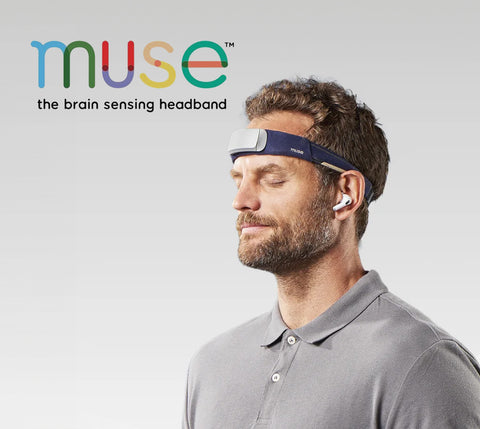
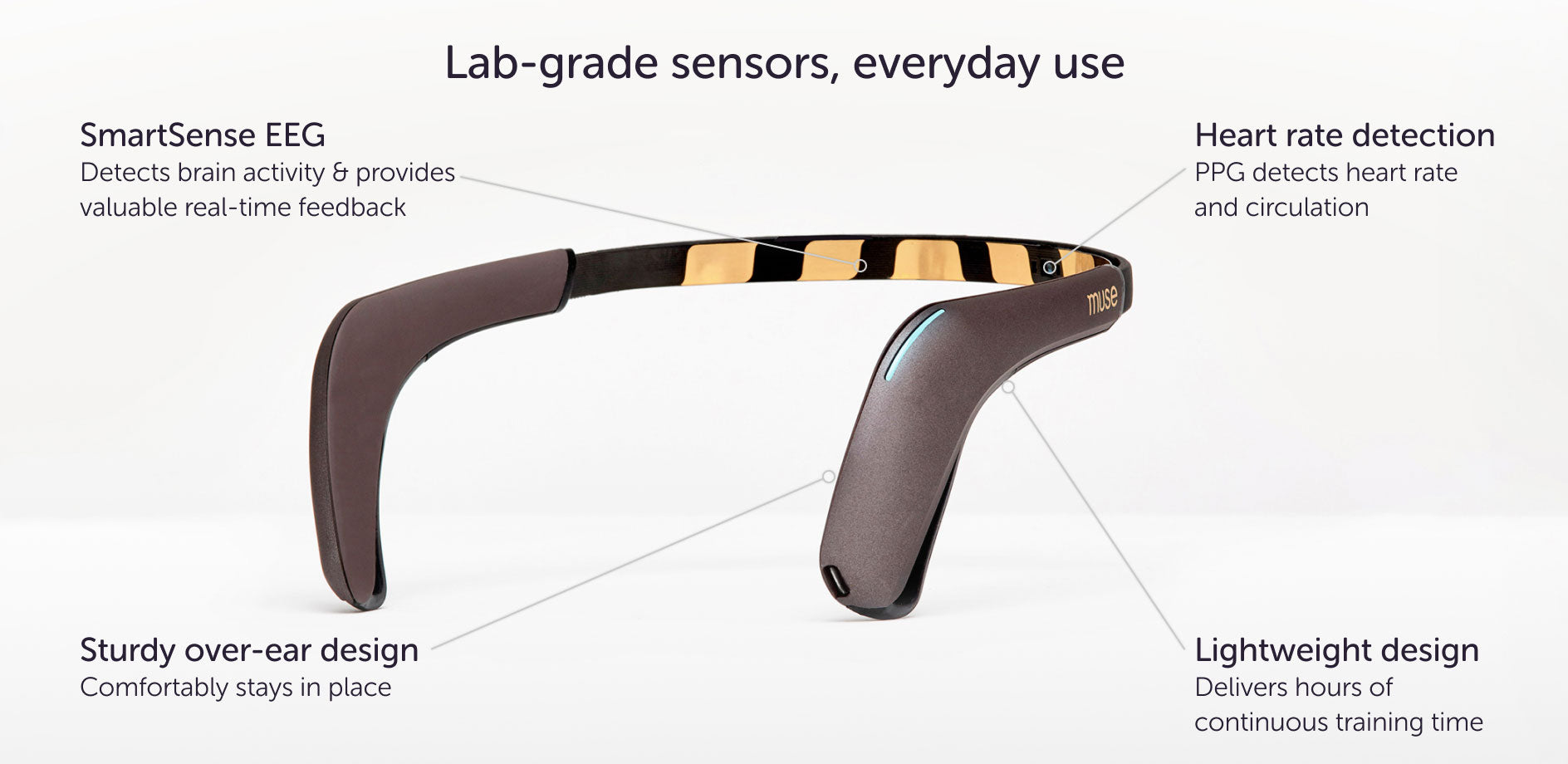
Muse is a consumer EEG (electroencephalography) neurofeedback headband made by Canadian company InteraXon. It sits across your forehead and behind your ears, using seven sensors across four channels to measure your brain's electrical activity in real time during meditation sessions.
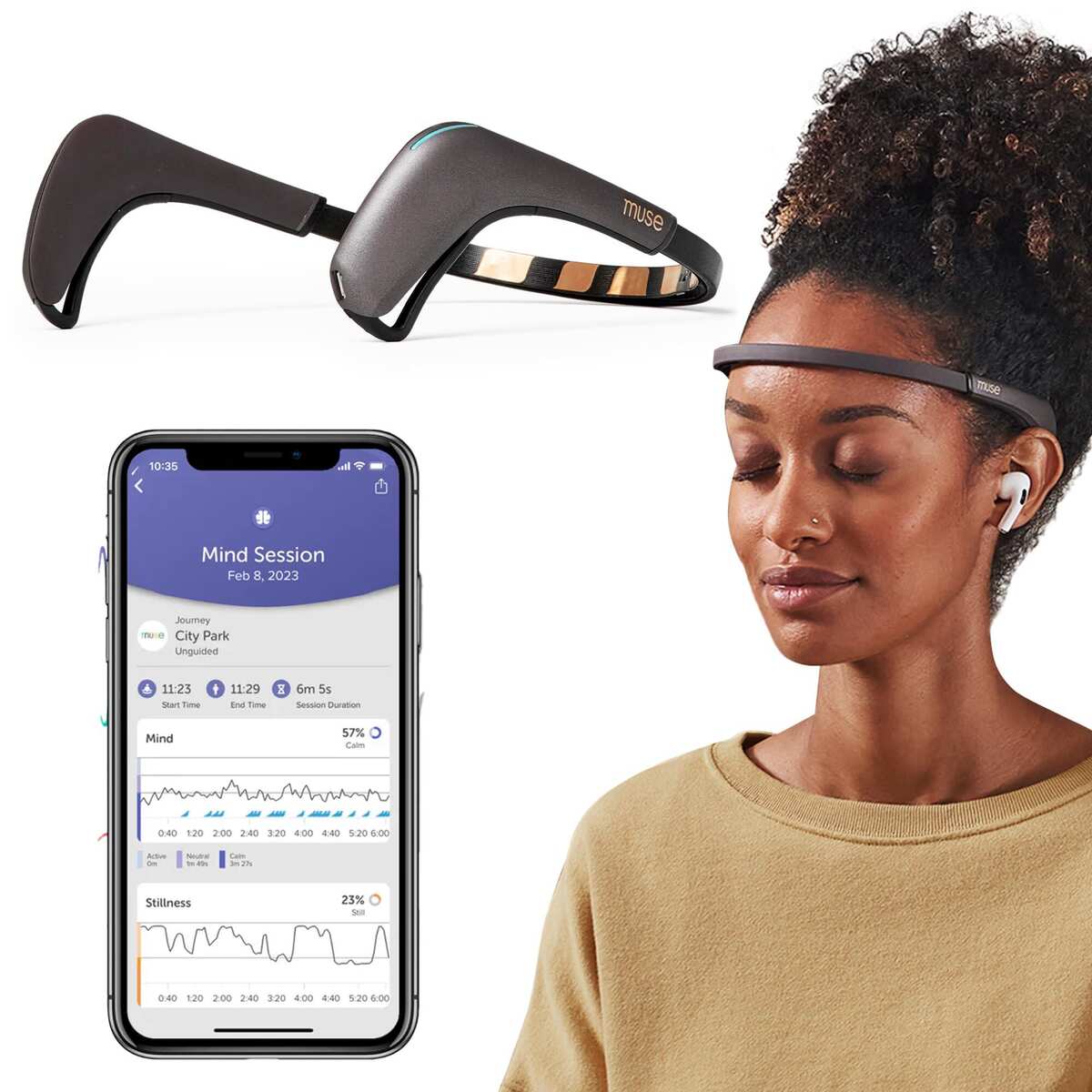
That raw brainwave data gets converted through the Muse app into audio feedback: typically nature sounds like wind, rain, or birdsong, that respond to your mental state. When your mind is calm and focused, the sounds are peaceful. When your mind wanders, the sounds shift, nudging you gently back to presence.
It's essentially a mirror for your brain, giving you real-time data on something you've never been able to see before.
The Two Main Models
Muse 2
The classic meditation-focused model. Measures EEG, heart rate, breathing, and body movement. Ideal for meditation training and focus sessions.
Muse S (Athena)
A softer, sleep-optimized version designed to be worn during sleep as well. The 2025 Muse S Athena adds fNIRS, functional near-infrared spectroscopy, making it the first consumer wearable to combine both EEG and fNIRS.
The Science Behind Muse: What the Research Actually Says
This is where Muse separates itself from most wellness gadgets. With over 200 peer-reviewed studies using Muse devices from institutions including NASA, Harvard, and the Mayo Clinic, the evidence base is real.
Stress and Anxiety Reduction
A randomized controlled trial on women with newly diagnosed breast cancer found that consistent Muse use improved fatigue, quality of life, and stress levels compared to controls. The researchers concluded that EEG neurofeedback devices "have the potential to be efficacious and effective tools to reduce stress."
Long COVID and Cognitive Recovery
A 2024 to 2025 open-label clinical trial had 45 Long COVID patients use Muse S daily for 90 days. Participants reported improvements in sleep, fatigue, mood, cognitive function, and overall quality of life, with benefits observed even during the 90-day post-treatment observation period.
Healthcare Professional Burnout
A pilot study using Muse S with healthcare professionals during the pandemic found sustained improvements in stress, resilience, and quality of life at both 3 and 6 months, with cognitive improvements that held long after the study ended.
Sleep Quality
A 2021 study led by Western University, Cambridge Brain Science, and InteraXon using Muse S sleep-support technology showed a 20% improvement in the Pittsburgh Sleep Quality Index relative to controls.
What Muse Actually Measures
Understanding what's being tracked helps you get more out of the device.
EEG (Electroencephalography)
The core technology. Seven sensors detect brainwave patterns across the frontal and temporal cortices, distinguishing between active and calm brain states in real time. This is the same technology used in clinical EEG settings, miniaturized and made accessible.
PPG (Photoplethysmography)
Tracks heart rate during sessions, giving you insight into how your nervous system is responding to your practice.
Accelerometer
Measures breathing rhythms, allowing you to pace your body for energy or relaxation.
Gyroscope
Detects movement shifts, supporting posture and balance awareness.
fNIRS (Muse S Athena only)
Measures blood oxygenation in the brain, revealing how hard your mind is working to maintain focus and endurance. Genuinely cutting-edge for a consumer device.
Why Real-Time Feedback Changes Your Meditation Practice
Here's what most people miss about why Muse works: meditation without feedback is training blind.
Traditional meditation practice relies entirely on self-report. You sit, you try to focus, you think you're doing well, and you have no idea whether your brain actually entered a calm state or whether you spent 20 minutes in a low-grade loop of mental noise.
Muse removes that ambiguity. When you hear the soundscape shift in response to your actual brain activity, you start to learn what calm actually feels like, not what you imagine it feels like. Over time, you build a real map of your own mental states.
This is the core principle of neurofeedback: real-time data accelerates learning. Your brain gets immediate feedback on what it's doing and learns to do it better, faster.
For breathwork practitioners, meditators, or anyone serious about nervous system regulation, this is a meaningful upgrade to your practice.
Who Is Muse Best For?
You'll get the most out of Muse if you:
Already meditate or want a consistent practice with objective data on your progress
Are working through anxiety, stress, or burnout and want a non-pharmaceutical tool with real evidence
Are interested in sleep optimization and want detailed tracking alongside meditation support
Are a biohacker who wants brainwave data to add to your health picture
Have ADHD or focus challenges and want a training tool for attention regulation
Are a practitioner or therapist who wants to incorporate neurofeedback into client work
Muse may not be the right fit if:
You're brand new to any form of wellness practice. Building foundational habits first will serve you better
You want a completely passive experience. Muse requires engagement and consistency to work
The investment feels out of reach right now. There are simpler starting points before adding devices
Muse and the Biohacking Framework
I talk a lot on ThriveTools about the principle of layering, building a solid physiological foundation before adding more sophisticated interventions. Muse fits naturally into an intermediate to advanced biohacking protocol.
Foundation Layer: Address First
Sleep quality, nutrition, gut health, magnesium, omega-3s, vitamin D
Nervous System Layer: Address Next
Breathwork practice, somatic work, stress regulation, adaptogens like Reishi and Ashwagandha
Advanced Optimization Layer: Where Muse Lives
Real-time neurofeedback, HRV training, photobiomodulation, targeted nootropics
If your foundation is solid and you're ready to take your meditation practice and mental performance to the next level with objective data, Muse is one of the most well-researched tools available at the consumer level.
My Honest Take After Using Muse
The first few sessions feel strange. Seeing your mind wander in real time via audio feedback is humbling. You realize quickly how rarely your brain actually settles into a genuinely calm state, even when you think you're meditating well.
That initial humility is actually the most valuable part. It recalibrates your self-assessment and gives you an honest baseline to work from. From there, the progress is trackable, motivating, and real.
The sleep tracking with Muse S is also genuinely useful, especially if you're working on sleep architecture, HRV recovery, or trying to understand how lifestyle factors affect your rest.
After 14 years of wellness practice, I don't reach for devices easily. Muse earned its place.
Get Muse With My Discount Code
I've partnered with Muse to offer a discount for the ThriveTools community. Copy the code below and use it at checkout for 25% off your headband.
Discount Code
25% off your Muse headband at checkout
Shop MuseAffiliated link. I only recommend brands I genuinely use.
Frequently Asked Questions
Is Muse scientifically proven?
Muse devices have been used in over 200 peer-reviewed studies from institutions including NASA, Harvard, and the Mayo Clinic. Research has shown benefits for stress reduction, sleep quality, cognitive recovery, and anxiety management.
Is Muse safe?
Yes. EEG is a passive measurement technology, it reads electrical activity but does not emit anything. It's the same technology used in clinical neurology settings.
How long should I use Muse per session?
Most studies used sessions of 5 to 10 minutes. Consistency matters more than duration. Daily practice for 10 minutes will outperform occasional 30-minute sessions.
What's the difference between Muse 2 and Muse S?
Muse 2 is optimized for daytime meditation sessions. Muse S is softer, designed for sleep as well as meditation, and includes sleep tracking features. The Muse S Athena (2025) adds fNIRS sensors for more detailed cognitive monitoring.
Can Muse help with anxiety?
Research supports EEG neurofeedback for anxiety reduction. Muse devices have been studied specifically in anxiety contexts, with results suggesting consistent use improves stress markers and self-reported anxiety.
Do I need to meditate to use Muse?
No prior meditation experience is required. The app guides you through sessions with real-time feedback, making it accessible for beginners while remaining valuable for experienced practitioners.
Eden Laraki is the founder of ThriveTools.co, a science-backed wellness and biohacking platform covering supplements, tonic herbs, breathwork, plant medicine, and cognitive optimization, built from 14 years of personal research and self-experimentation.