Disclosure: I'm a Silver Fern ambassador through a referral-points program, not a cash-commission program. I have a professional interest in this category; the science below stands on its own. This article is educational, not medical advice.
I run ThriveTools.co, a science-backed wellness and biohacking platform built from 14 years of personal research. Gut health is the category I get asked about most — and prebiotics vs probiotics is the confusion I see most. Here's the straight version, with the definitions and evidence limits kept separate from product recommendations.
The 30-second version
- Probiotics: live microorganisms that confer a demonstrated health benefit when administered in adequate amounts — the “seed” shorthand. Evidence is specific to the organism, product and use, not simply the presence of live microbes.
- Prebiotics: substrates selectively used by host microorganisms that confer a health benefit — the “feed” shorthand. Some fibers fit this definition, but not all dietary fiber is an established prebiotic.
- Synbiotics: mixtures of live microorganisms and substrates selectively used by host microorganisms that confer a health benefit. “Seed + feed” is a useful mnemonic, not proof that any combination qualifies.
These distinctions follow the ISAPP consensus definitions of probiotics, prebiotics, and synbiotics.
Why gut diversity matters
A quick data point on why people care: Dai et al.'s 2026 Nature study, “Sugar-rich foods exacerbate antibiotic-induced microbiome disruption”, published September 30, tracked meals from 173 hospitalized hematopoietic-cell-transplant patients. The microbiome model used 158 patients with paired longitudinal samples.
After broad-spectrum-antibiotic exposure, each extra 100 grams of sweets-and-sugars intake was associated in the model with an additional 24.1% decrease in mean microbial α-diversity compared with samples without previous antibiotic exposure. That is a model prediction in a specific, medically complex population — not a universal causal effect of sugar.
In a separate mouse experiment, sucrose plus the antibiotic biapenem produced 33.4-fold greater enterococcal burden by day six than antibiotic treatment without sucrose supplementation. Sucrose alone did not produce that effect without antibiotics. The mouse result is not a 33.4-fold human effect.
The study helps explain why diet, antibiotic exposure and microbiome composition are studied together. It did not test prebiotics or probiotics, establish a recovery regimen, or show that a Silver Fern product changes these outcomes. Microbial diversity is one research measure, not a complete diagnosis of gut health.
These results should not become a universal treatment instruction. Discuss dietary changes and supplement use during antibiotic treatment with your clinician or dietitian, particularly during serious illness.
How to actually use this
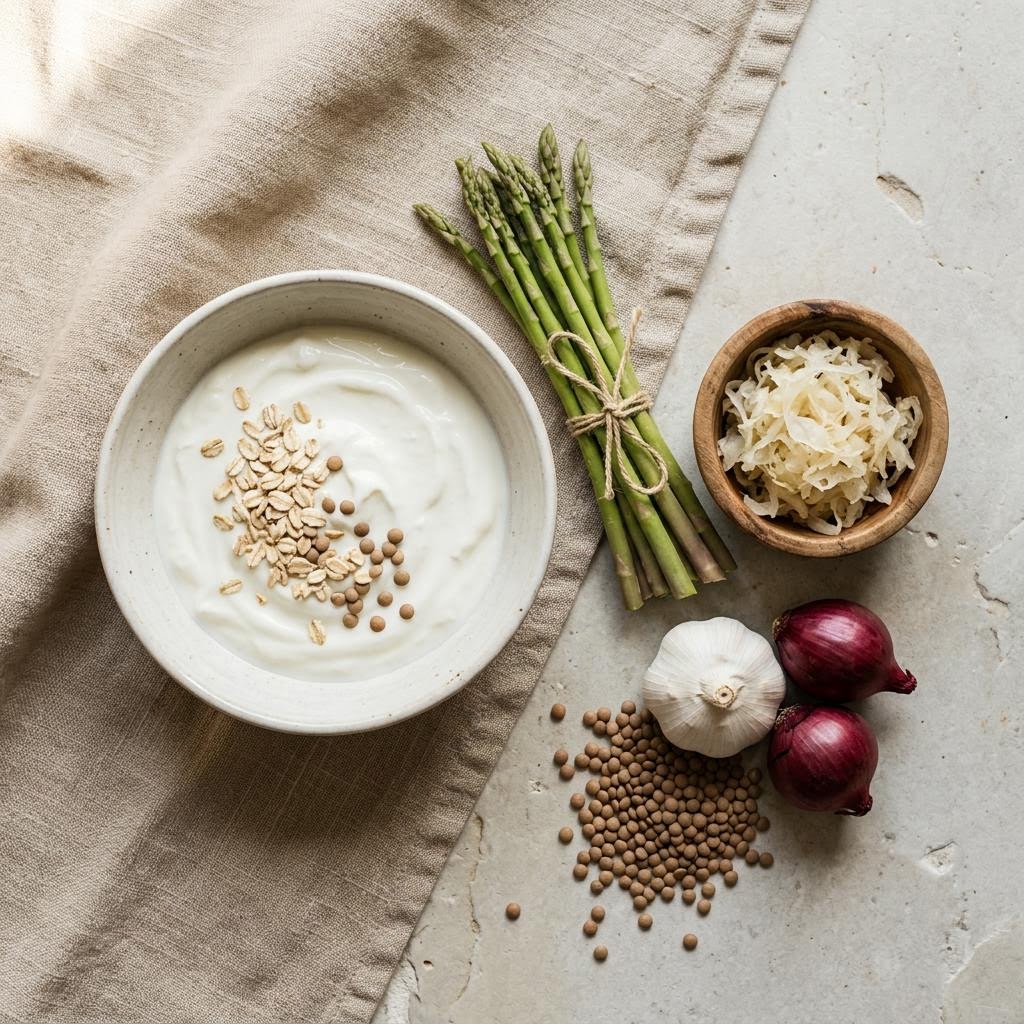
- Food first: a varied diet can include plant foods such as legumes, oats, onions, garlic and asparagus. Yogurt, kefir, kimchi and sauerkraut may contain live cultures, depending on preparation and processing. Live cultures alone do not make a food a clinically demonstrated probiotic.
- Supplements are a specific decision: check the exact organisms or strains, amount, intended use and supporting evidence. A dietary “gap,” travel, or an antibiotic course does not automatically mean a probiotic is indicated.
- Follow the evidence, not a slogan: dose, timing, duration and suitability depend on the particular product and purpose. There is no universal rule that consistency beats dose or that every gut intervention works on the same timescale.
For the relationship and referral setup, see my Silver Fern brand guide. Current source-listed partner offers are on my discount codes page.
Sources and scope
The study is Dai et al., Nature (2026), DOI 10.1038/s41586-026-11077-3. September 30 is its publisher date; October 1 coverage does not change the original publication date.
For accessible terminology resources, see ISAPP's public resources. Evidence for any supplement should be evaluated separately from these general definitions and the observational human diet analysis.
FAQ
Should I take prebiotics and probiotics at the same time?
Some studied products combine live microorganisms with a substrate and are called synbiotics. That does not mean any probiotic plus any fiber will work, or that everyone needs both. Follow the specific product instructions and get medical guidance when relevant; there is no universally required timing ritual.
Can I get both from food alone?
Plant foods can provide fibers that microorganisms use, and some fermented foods contain live cultures. But not every fiber is a demonstrated prebiotic and not every fermented food is a demonstrated probiotic. Whether food or a supplement suits a particular purpose depends on the evidence, the product and your needs.
Do probiotics help after antibiotics?
Evidence depends on the organism or strain, dose, patient group and outcome. The 2026 sugar-and-antibiotics study discussed here did not test probiotics, so it does not establish that taking them restores diversity. Ask your clinician about whether a specific product is appropriate, especially if you are immunocompromised or seriously ill.
Which probiotic brand do you recommend?
I explain my Silver Fern ambassador relationship in the linked brand guide. Partnership is not proof that a product is right for everyone; compare the specific strains, evidence, labeling and your clinical situation rather than choosing on a brand name alone.