_1773872278317-xdbnT1AA.jpg)
If you've spent any time researching Cordyceps supplements you've noticed something that doesn't immediately make sense. Most products are reasonably priced. But occasionally you'll come across products marketed as wild or authentic Cordyceps sinensis that cost dramatically more, sometimes ten times more, for a similar amount of powder.
The marketing around these premium products makes them sound like a different league entirely. Rare. Harvested by hand in the Himalayas. Used by emperors. The real thing.
Meanwhile CS-4, the standardised Cordyceps strain used in virtually every clinical study ever published on Cordyceps, sits quietly at a fraction of the price.
So which one is actually worth taking? And is there any real biological difference that justifies the premium? Having taken Cordyceps every single day for over 10 years and spent considerable time in the research on this specific question, here is my honest answer.
What Wild Cordyceps Sinensis Actually Is
Wild Cordyceps sinensis is not typically found in any supplement you can readily purchase. It is one of the most expensive natural products in the world, rare in the wild because of the lifecycle of the fungus and the specific environmental growing conditions necessary for it to thrive. It grows mainly at high elevations in Tibet and the Chinese provinces of Sichuan, Yunnan, Qinghai and Gansu, as well as in India, Nepal, and Bhutan.
The fungus attacks the larva of the Hepialus moth, grows through its body, and eventually sprouts a fruiting body from the caterpillar's head. Every piece is harvested by hand by local communities in remote, high-altitude terrain. In Tibet it is known as Yartsa Gunbu, winter worm, summer grass.
The scarcity is genuine. The harvesting process is genuinely labour-intensive. And the traditional medicine credentials are real. Wild Cordyceps sinensis has been used in traditional Chinese and Tibetan medicine for centuries to treat fatigue, sickness, kidney disease, and low sex drive, and it has been dubbed Himalayan gold due to the rapid rise in its price.
The problem for anyone trying to buy it is that wild Cordyceps sinensis is not in 99.9% of Cordyceps herbal supplements because of its exceptionally high price tag. What you find sold as wild Cordyceps sinensis in supplement form is almost always either a tiny amount of genuine material heavily padded with cheaper material, a completely different species sold under the same name, or something with no Cordyceps in it at all. High cost in the international market often leads to adulteration and substitution.
What CS-4 Actually Is
CS-4 is a specific mycelial strain isolated directly from wild Cordyceps sinensis and cultured under controlled fermentation conditions. It was developed by Chinese scientists not as a cheap imitation but as a reliable, scalable alternative to a wild product that was becoming too scarce and expensive for consistent clinical use.
The key thing to understand about CS-4 is that virtually all the research you will ever read about Cordyceps benefits, the performance studies, the kidney protection data, the respiratory research, the immune modulation evidence, was done on CS-4. Not wild Cordyceps sinensis. CS-4 is the clinically validated form. It has decades of use in Chinese hospital settings under the JinShuiBao brand and is officially recognised by the Chinese government as a safe substitute for the wild product.
When someone cites the Cordyceps research to support a wild Cordyceps sinensis product, they are almost always citing CS-4 evidence. The two are not interchangeable in that direction.
The Price Reality
Wild Cordyceps sinensis products that are genuinely authentic command extraordinary prices. Wild-harvested Tibetan Cordyceps can cost between $20,000 and $50,000 per kilogram at wholesale, making it one of the most expensive natural products in the world. In contrast, cultivated alternatives typically range from $300 to $1,500 per kilogram.
At retail that translates to a small amount of authentic wild Cordyceps sinensis costing hundreds of dollars for just a few grams, enough for perhaps a week or two of therapeutic use. Meanwhile a quality CS-4 extract like Hyperion Herbs Cordyceps CS-4 costs $63 Canadian for 100g, a supply that lasts weeks at a meaningful daily dose.
The question is not which one sounds more impressive. The question is whether the wild product produces meaningfully better outcomes that justify that extraordinary cost difference. And the honest answer, when you follow the research rather than the marketing, is no. For most people it does not.
What the Chemistry Actually Shows
Active Compounds: What the Science Shows
This is the most important section, and the one most content on this topic gets wrong.
When researchers compared the chemical composition of wild Cordyceps sinensis against cultivated CS-4 directly, the results were not what most people expect. The cultivated CS-4 product contained higher concentrations of cordycepin and adenosine, the two primary active compounds, than the wild-harvested product. Not lower. Higher.
Wild Cordyceps sinensis does contain a broader range of lipid metabolites and certain unique nucleosides that CS-4 does not fully replicate. Whether that additional complexity produces meaningfully different real-world health outcomes has not been established in head-to-head human clinical trials. The wild product has historical and cultural significance that is genuine. The clinical evidence for wild superiority over CS-4 at equivalent dosing is not.
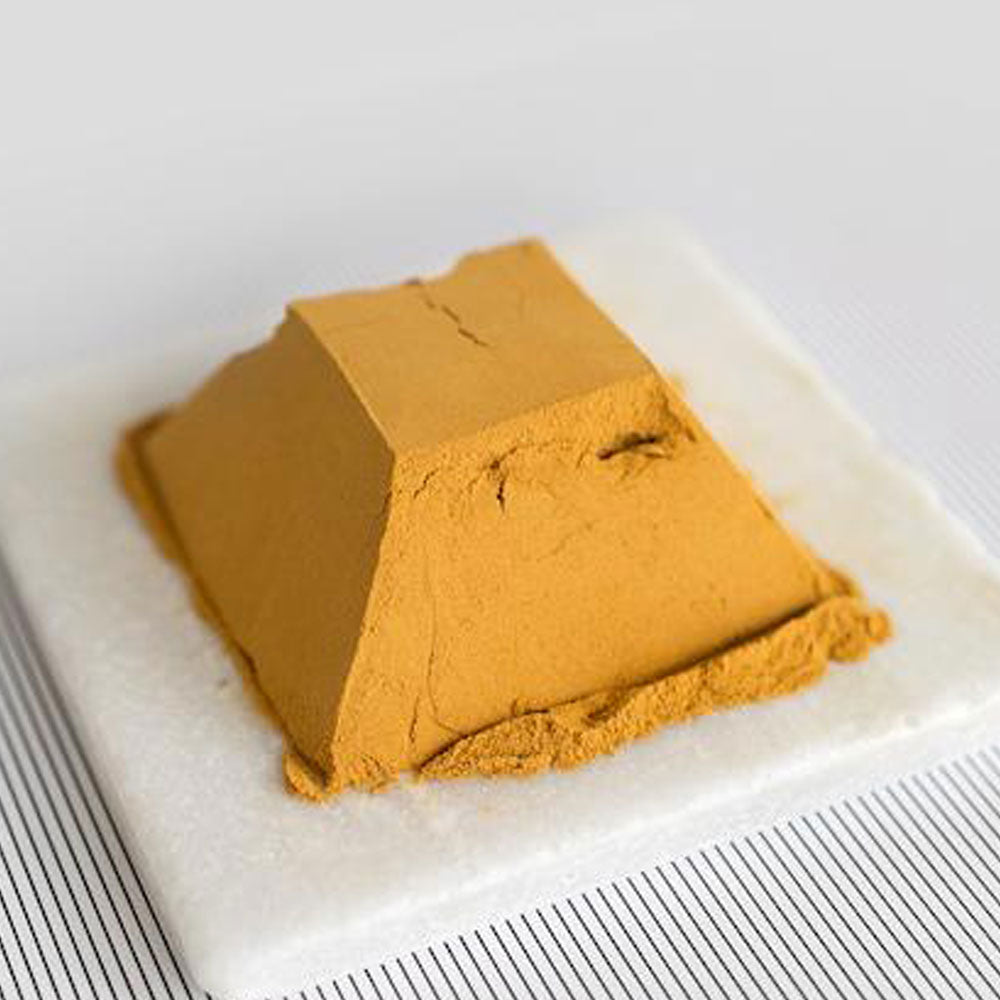
Cultivated CS-4 offers affordable, scalable production with consistent beta-glucan and cordycepin content suitable for capsules and powders. For buyers seeking value and safety, cultivated mycelium-based Cordyceps supplements provide comparable bioactive compounds at a fraction of the cost.
The Quality Variable That Matters More Than Wild vs CS-4
Here is the thing most people miss when debating wild Cordyceps versus CS-4. The more important variable for most buyers is not wild versus cultivated. It is how the CS-4 is processed.
Most Cordyceps products on the market, including many marketed as premium, are mycelium grown on grain. Rice, oats, sorghum. The grain substrate becomes part of the final product, meaning a significant portion of what you're swallowing is starch rather than active Cordyceps compounds. Some products contain up to 30% starch by weight from the grain substrate while still claiming to be pure Cordyceps.
A properly processed CS-4 extract with no grain filler at therapeutic doses will outperform the vast majority of products marketed as wild Cordyceps sinensis, both in verified active compound levels and in the certainty of what you're actually taking.
This is why reading the label matters as much as reading the marketing. If a Cordyceps product does not specify that it is grain-free and does not disclose its adenosine or cordycepin content, you have no basis for knowing what you're paying for regardless of what the front of the bag says.
This same principle applies across the tonic herb category. I cover it in depth in my complete tonic herbs guide and in my review of reishi and schisandra, where the same extraction and sourcing standards apply.
Cordyceps Militaris: The Third Option Worth Knowing
There is a third species in this conversation that deserves mention. Cordyceps militaris is a different species from Cordyceps sinensis that can be cultivated as a fruiting body, meaning you get the full fruiting body rather than mycelium, with the complete active compound profile that entails.
Cordyceps militaris fruiting body products like the one from Hyperion Herbs at around $96 USD for 250g offer an interesting middle ground. Fruiting body rather than mycelium, cultivated so it is accessible and affordable, with a growing body of research supporting comparable effects to CS-4 for energy, oxygen utilisation, and immune function.
For people who specifically want a fruiting body product rather than a mycelium extract, Cordyceps militaris is the most practical option currently available at meaningful quality and price points.
Cordyceps fits naturally into a broader biohacking supplement stack. If you want help building a protocol around your specific goals and biology, I offer personalised guidance for exactly that.
My Honest Verdict
For the overwhelming majority of people, wild Cordyceps sinensis products are not worth the premium. The clinical research base supporting Cordyceps benefits was built almost entirely on CS-4. Authentic wild products are extraordinarily rare, prone to adulteration, and have not been shown to produce superior outcomes in head-to-head human trials.
The intelligent choice is a properly produced CS-4 extract with no grain filler, verified active compound content, and a brand transparent enough to tell you exactly what is in their product and how it was processed.
I've taken Cordyceps every single day for over 10 years. The consistent, sustained energy and oxygen efficiency it produces, what traditional TCM describes as Kidney Jing and Lung Qi tonification, comes from quality and consistency of use, not from paying a premium for a wild harvest story.
The Product I Recommend: Hyperion Herbs Cordyceps CS-4
Hyperion Herbs produces a 100% pure Cordyceps CS-4 mycelium extract with no fillers, no flow agents, no binders, and no grain substrate. Their Cordyceps militaris fruiting body extract is also available for those who prefer a fruiting body product. Both are single-ingredient products with full transparency about what's inside.
I recommend Hyperion Herbs above every other Cordyceps brand I've looked at because the quality standard is genuine and consistent, and because at $63 Canadian for 100g of CS-4 extract you are getting a real therapeutic product at a price point that makes daily long-term use actually sustainable.
Further Reading and Sources
PMC 2025. Comparative Metabolite Profiling Between Cordyceps sinensis and Other Cordyceps by UHPLC-MS/MS. pmc.ncbi.nlm.nih.gov/articles/PMC11851418
PMC. Effect of CS-4 on Exercise Performance in Healthy Older Subjects. pmc.ncbi.nlm.nih.gov/articles/PMC3110835
Real Mushrooms. Cordyceps Sinensis vs Militaris, Comprehensive Species Guide. realmushrooms.com/cordyceps-sinensis-vs-militaris
NCBI Bookshelf. Cordyceps as an Herbal Drug, Herbal Medicine Comprehensive Monograph. ncbi.nlm.nih.gov/books/NBK92758
Healthline. 6 Benefits of Cordyceps All Backed by Science. healthline.com/nutrition/cordyceps-benefits
Affiliate Disclosure: This article contains affiliate links. I may earn a commission if you purchase through these links at no additional cost to you. I only recommend products I personally use and genuinely believe in. Hyperion Herbs Cordyceps has been part of my daily tonic herb protocol for years.
Medical Disclaimer: This article is for informational purposes only and does not constitute medical advice. Always consult a qualified healthcare professional before beginning any new supplement regimen.