I run ThriveTools.co, a science-backed wellness and biohacking platform built from 14 years of personal research. (Disclosure: I'm an affiliate partner of the sauna and cold-plunge brands featured in this post — that's how I can offer verified codes instead of random coupon-site guesses.) I only publish offers I can personally verify, and I re-check every code on this site monthly.
Contrast therapy is the simplest idea in recovery that most people overcomplicate: get hot, get cold, repeat. Done at home, it means alternating a sauna session with a cold plunge (or a cold shower, if you do not have a tub yet) for a few cycles. This guide covers what it is, a beginner protocol, what the evidence actually supports, and the safety rules that matter more than any protocol detail.
What contrast therapy actually is
Contrast therapy is the deliberate alternation between heat exposure and cold exposure — typically sauna, then cold plunge, back and forth for 2 to 4 cycles. Heat dilates your blood vessels; cold constricts them. That repeated expansion and contraction is often called a vascular workout: a pumping action in your circulation that, over time, is associated with supporting muscle recovery and stress resilience.
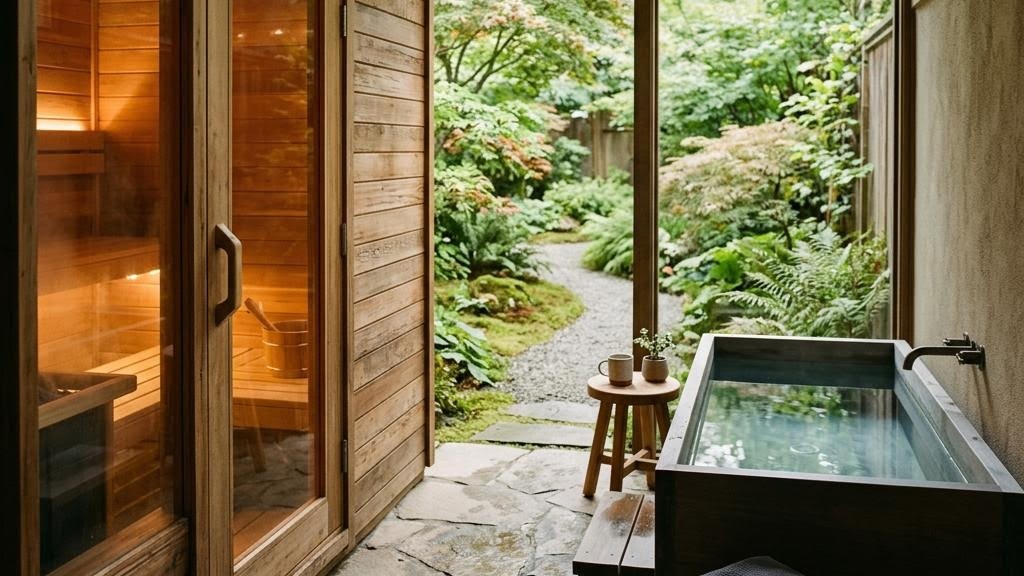
You do not need a spa to do it. At home, the heat side can be a portable or home sauna — my infrared sauna vs traditional sauna breakdown covers how the two heat options differ — and the cold side can be a dedicated tub, a bathtub with ice, or a cold shower. The practice is the alternation, not the equipment. If you are new to the cold half, start with my cold plunge at home guide first; it covers temperature and timing for beginners in full.
A beginner contrast protocol
A common at-home protocol, drawn from category guides:
- Sauna: 10–15 minutes. Comfortable heat to start — you should be sweating, not enduring.
- Cold plunge: 30 seconds to 3 minutes at 50–59°F (10–15°C). Beginners start at 30 seconds; a cold shower counts if you do not have a tub.
- Rest: about 5 minutes at room temperature, breathing slowly. My breathwork beginner's guide covers the slow-breathing basics that make the cold minute manageable.
- Repeat for 2–3 cycles in total.
Two finishing rules: end on cold if your goal is recovery and alertness; end on heat if your goal is relaxation and winding down for sleep. And one timing rule for lifters: cold immersion immediately after resistance training may modestly blunt muscle-building signals, so if hypertrophy is your main goal, wait a few hours after lifting before a cold session.
What the evidence actually supports
Be honest about the difference between "well supported" and "promising". The best-supported benefit is post-exercise recovery: in one team-sport study, athletes alternating hot saunas and cold plunges recovered from fatigue within 24–48 hours, where cold immersion alone did not reproduce the result. That is a real finding — and it is also a small, athlete-focused literature, so it does not license big promises about inflammation, sleep, or longevity.
What else is reported, with the caveats attached: cold immersion can raise dopamine — a 2024 review in GeroScience reports increases of up to 250% after cold-water immersion — and norepinephrine rises sharply in the cold, which matches the alertness and mood lift people describe afterwards. Heat exposure is associated with heat-shock protein production, proteins involved in cellular repair under stress. Treat all of that as promising physiology, not proven outcomes. Any page that promises specific results from contrast therapy — including this one — deserves scepticism.
Safety first
Temperature extremes are a real stressor, and the safety rules matter more than the protocol:
- Get clinician clearance first if you have cardiovascular disease, uncontrolled high blood pressure, arrhythmia, a respiratory condition, Raynaud's or cold sensitivity, or if you are pregnant — or if you take medication affecting blood pressure or temperature regulation.
- Hydrate before and after. Sauna sweating plus temperature swings dehydrate fast; electrolytes help.
- Never start out alone. Have someone nearby for your first sessions, and exit the cold immediately if you feel intense numbness or difficulty breathing.
- Warm up gradually afterwards rather than jumping straight into a hot shower, which can drop core temperature too fast and cause dizziness.
The home setup, honestly
A home contrast setup is two purchases, not one, and that is the real barrier: a heat source and a cold source, close enough together that the alternation is frictionless. If you already own one half, the other half is the decision — and a cold shower is a legitimate way to test whether you enjoy the practice before buying a tub. For the heat side, I partner with Therasage (portable saunas and infrared mats) — code THRIVETOOLS via Therasage. For the cold side, I partner with BlueCubeBaths (premium cold therapy tubs) — code thrive35 via BlueCubeBaths. Full details are in my Therasage discount code post and my BlueCubeBaths discount code post, and every verified offer I track is on my discount codes page. My best recovery tech roundup compares the wider category if you are still deciding.
Contrast therapy FAQ
What is contrast therapy?
Alternating heat exposure (usually a sauna) with cold exposure (usually a cold plunge), repeated for 2–4 cycles. Heat dilates blood vessels and cold constricts them, creating a pumping effect in your circulation.
How long should a contrast therapy session last?
A typical at-home session runs 45–75 minutes: 10–15 minutes of sauna, 30 seconds to 3 minutes of cold, about 5 minutes of rest, repeated for 2–3 cycles.
Should I start with heat or cold?
Start with heat, then go to cold. That heat-first order is the standard protocol in every category guide, and it makes the cold minute far more tolerable.
Should I end on hot or cold?
End on cold for recovery and alertness; end on heat for relaxation and preparing for sleep.
How often should I do contrast therapy?
2–4 sessions per week is typical in research protocols. Start lower — once or twice a week — and build only if you enjoy it and recover well.
Is contrast therapy safe?
For healthy adults following the protocol above, it is a widely used wellness practice — but it is a real physiological stressor. Get clinician clearance first if you have heart disease, uncontrolled high blood pressure, arrhythmia, a respiratory condition, Raynaud's, or are pregnant, and never start out alone.
Can I do contrast therapy without a cold plunge tub?
Yes. A cold shower, a bathtub with ice, or natural cold water all work for the cold half. A tub makes the habit repeatable year-round, but the practice is the alternation, not the equipment.
Bottom line
Contrast therapy is sauna plus cold plunge, repeated — not a gadget, not a miracle, and not a replacement for sleep, training, or food. Done conservatively, 2–3 cycles a few times a week, it is one of the most time-efficient recovery practices you can do at home. Start easy, respect the safety rules, and let the habit earn its place before you buy the second half of the setup.