The short answer
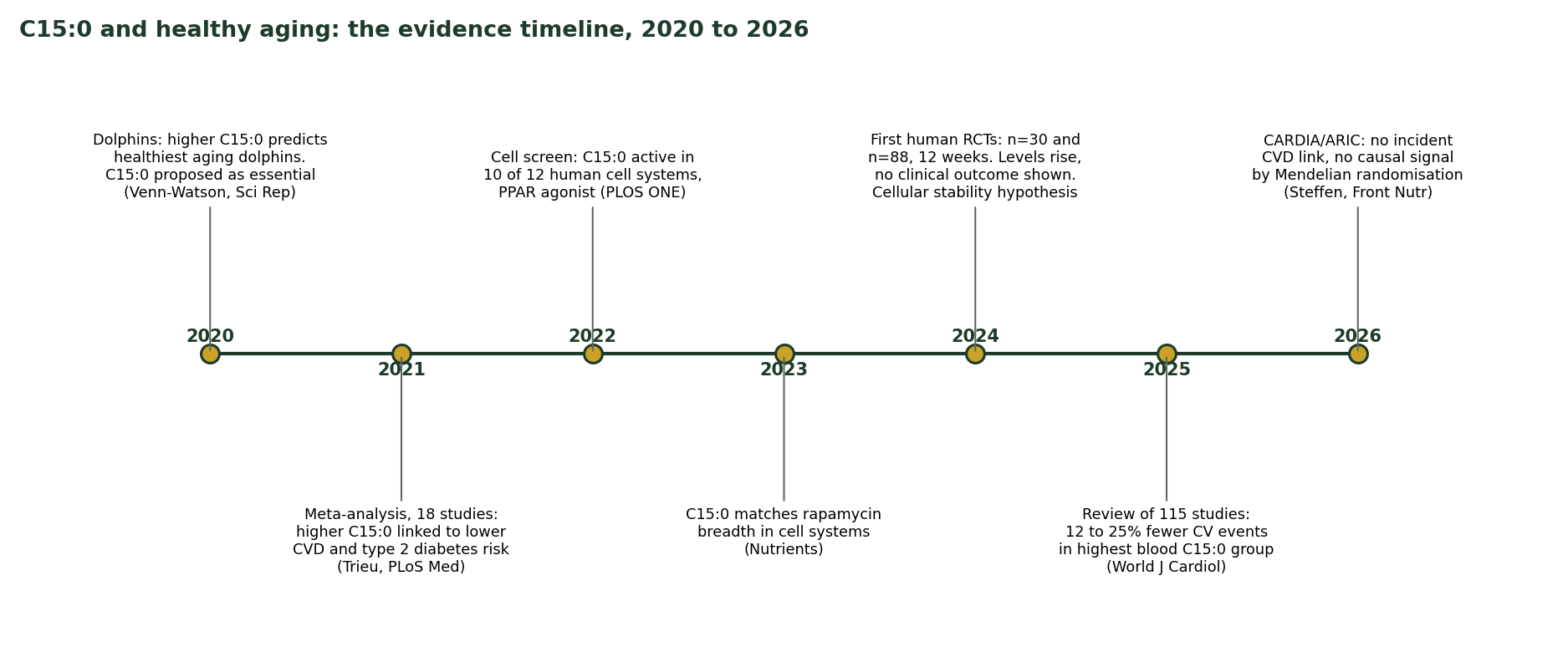
C15:0, or pentadecanoic acid, is a 15-carbon saturated fat found mostly in dairy fat. It went from an obscure lab measurement to a heavily marketed longevity supplement in about 5 years. A veterinary epidemiologist studying aging in US Navy dolphins noticed that the healthiest old dolphins had the highest C15:0 levels. That observation launched a decade of research, and in 2020 the same researcher proposed that C15:0 is an essential fatty acid, the first new one identified in about 90 years.
Here is where the honest version splits from the marketing. The cell studies are real and striking: in lab screens using human cells, C15:0 showed as many clinically relevant activities as rapamycin, the best studied longevity drug. The population data is also real: people with higher blood C15:0 have less heart disease and less type 2 diabetes in large cohorts. But two small human trials have tested supplementation, and neither showed a health benefit, only higher blood levels. And in 2026, the first study designed to test whether the link is causal found no causal effect at all. No major nutrition body recognizes C15:0 as essential, and no lifespan study in any mammal has ever been done. C15:0 is a fascinating research question, not a proven longevity tool. There is no Thrive Tools discount code for fatty15, the best known C15:0 supplement, and this article has no affiliate link for it. You can browse the longevity tools that do have verified offers on the discount codes page.
What is C15:0?
Pentadecanoic acid is an odd-chain saturated fatty acid, which means its carbon chain has an odd number of atoms, 15, instead of the even numbers most fats have. It is a minor fat in the human diet. The main food source by far is dairy fat: butter, whole milk and cheese. Smaller amounts show up in some fish, beef fat and a few plants. It is also a marker scientists use to estimate how much dairy fat someone eats, because the body makes very little of it on its own.
That last point matters. Essential fatty acids are nutrients the body cannot make in enough quantity, so they must come from food. The only two currently recognized are linoleic acid (omega-6) and alpha-linolenic acid (omega-3), identified in 1929. The claim that C15:0 belongs on that list is the core of the whole debate, and it is still a proposal, not a consensus.
The dolphin discovery
The C15:0 story starts in the water, not in a nutrition lab. Dr. Stephanie Venn-Watson, a veterinary epidemiologist, was working with the US Navy Marine Mammal Program in San Diego, looking after aging bottlenose dolphins. Some of those dolphins live past 50, far longer than wild dolphins, and about 1 in 3 of the older animals were developing conditions that looked strikingly human: high cholesterol, insulin resistance, fatty liver disease, anemia and chronic inflammation.
When Venn-Watson combed through years of bloodwork, one nutrient kept surfacing at the top. The dolphins with the highest dietary and circulating C15:0 had the healthiest metabolic profiles and the fewest age-related conditions. That single observation launched a decade of research, funded in part by the Navy, and it is the origin of nearly every C15:0 claim you will see today.
There is an important conflict of interest to state plainly. Venn-Watson went on to co-found Seraphina Therapeutics, the company behind fatty15, the C15:0 supplement. She is lead author on the 2020, 2022, 2023 and 2024 papers that most C15:0 claims rest on. That does not make the work wrong, but it means independent replication matters more than usual, and so far there is very little of it.
The essential fatty acid claim
In 2020, Venn-Watson and colleagues published a paper in Scientific Reports proposing that C15:0 meets the criteria for an essential fatty acid. The argument has 2 parts. First, the body cannot make enough of it on its own, so it must come from the diet. Second, low levels are linked to poor health, and restoring them improves markers of health. The paper also showed that C15:0 is a dual partial agonist of PPAR-alpha and PPAR-delta, reaching 65.8 percent and 52.8 percent of maximum activity respectively. PPARs are receptors that regulate fat burning and metabolism.
A 2024 follow-up paper in the journal Metabolites went further, proposing a "cellular stability hypothesis" and a new deficiency syndrome. The idea is that C15:0 makes cell membranes sturdier and protects them against iron-driven fat damage, a form of cell death called ferroptosis. The paper proposed that levels below 0.2 percent of total circulating fatty acids count as deficient, that 0.4 to 0.64 percent is optimal, and that deficiency could accelerate aging in as many as 1 in 3 people.
A separate 2024 review in the journal Biochimie reached a more careful conclusion: C15:0 is a "potential candidate" for essential status, and further investigation is needed. No major nutrition body has adopted the claim. Not the National Academies, not the European Food Safety Authority, not the American Heart Association. A proposal from one research group, however interesting, is not the same as a scientific consensus.
What the cell studies show
The strongest C15:0 data comes from cells, not people. In 2022, Venn-Watson and colleagues tested C15:0 in BioMAP, a platform used in drug development to profile compounds across 12 human primary cell systems covering inflammation, immune function, fibrosis and tissue remodeling. C15:0 showed activity in 10 of the 12 systems, with no toxicity at the doses tested.
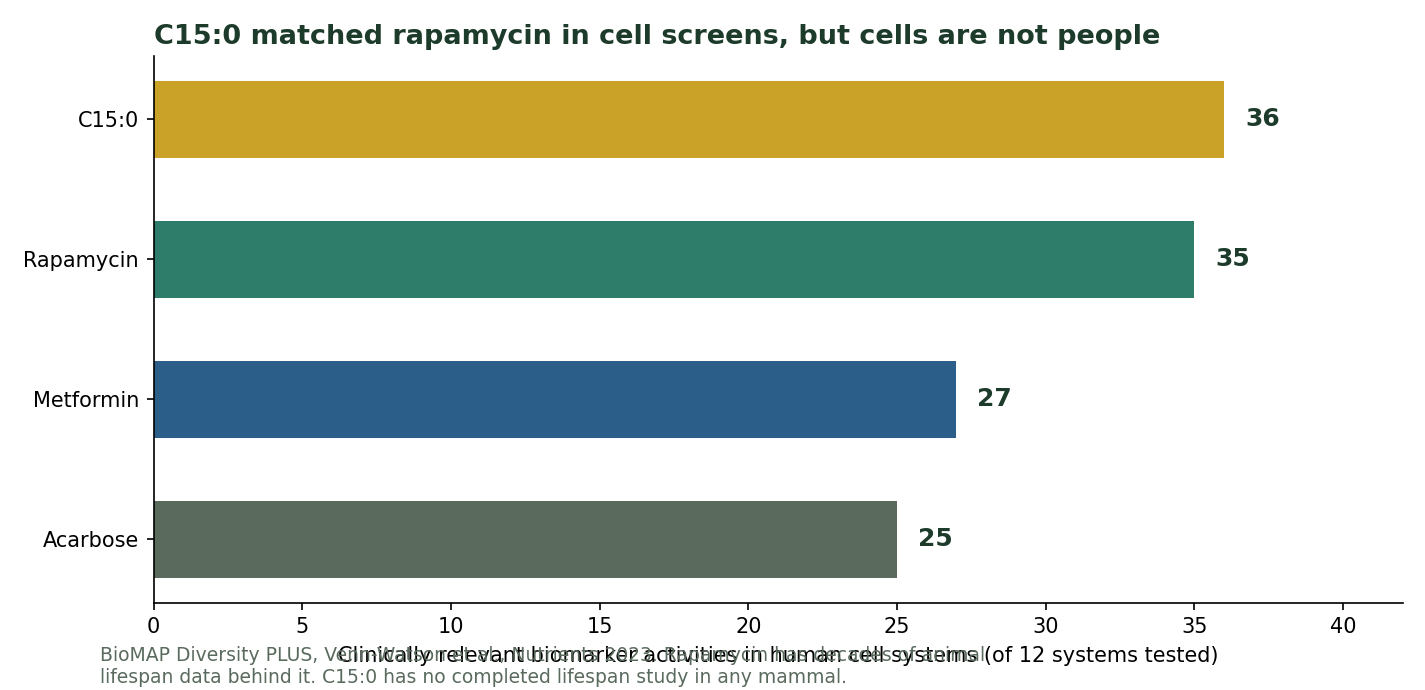
In 2023, the same group published a head-to-head comparison in the journal Nutrients. C15:0 showed 36 clinically relevant biomarker activities. Rapamycin, the gold standard longevity drug, showed 35. Metformin showed 27. Acarbose showed 25. The paper also reported that C15:0 activates AMPK and inhibits mTOR, the same pathways rapamycin and metformin act on.
That comparison is the single most quoted result in C15:0 marketing, and it needs a large qualifier. Rapamycin has decades of animal lifespan data behind it, including the large, multi-site mouse trials covered in our rapamycin article. C15:0 has no completed lifespan study in any mammal. Matching a drug in a cell screen is not the same as matching it in a body.
A 2025 study in Nutrients tested C15:0 against 94 human cancer cell lines and found growth-slowing effects in 13 of them, about 13.8 percent, with non-Hodgkin B-cell lymphomas the most responsive. That is early, exploratory work. It is not evidence that C15:0 prevents or treats cancer in people.
The human trials: 2 small studies, no health benefit shown
Only 2 small human trials of C15:0 supplementation have been published, and both are 12 weeks long.
The first, published in the Journal of Nutrition in 2024, randomized 30 adults aged 18 to 24 with overweight or obesity to 200 mg of C15:0 or placebo daily for 12 weeks. Supplementation raised circulating C15:0 levels, which is what it was designed to test. The headline results came from a responder analysis: in the half of participants whose blood levels passed 5 micrograms per milliliter, the liver enzyme ALT fell by 29 U/L, AST fell by 6 U/L, and hemoglobin rose by 0.60 g/dL compared with those who did not reach the threshold. Those are exploratory signals in a subgroup of 15 people, not a proven treatment effect.
The second, the TANGO trial published in 2024, randomized 88 women with non-alcoholic fatty liver disease to an Asian-adapted Mediterranean diet with or without 300 mg of C15:0. The diet drove the liver improvement. C15:0 added a modest extra reduction in LDL cholesterol, but it was not significantly better than diet alone on the main liver outcomes.
A larger trial in healthy older adults, looking at red blood cell health and markers of biological aging, is registered and underway. Until it reports, the honest summary is this: supplementation raises blood C15:0, and nothing more has been shown in people.
What the population data shows
The strongest epidemiological case for C15:0 comes from large cohorts that measured blood levels and then watched what happened over years.
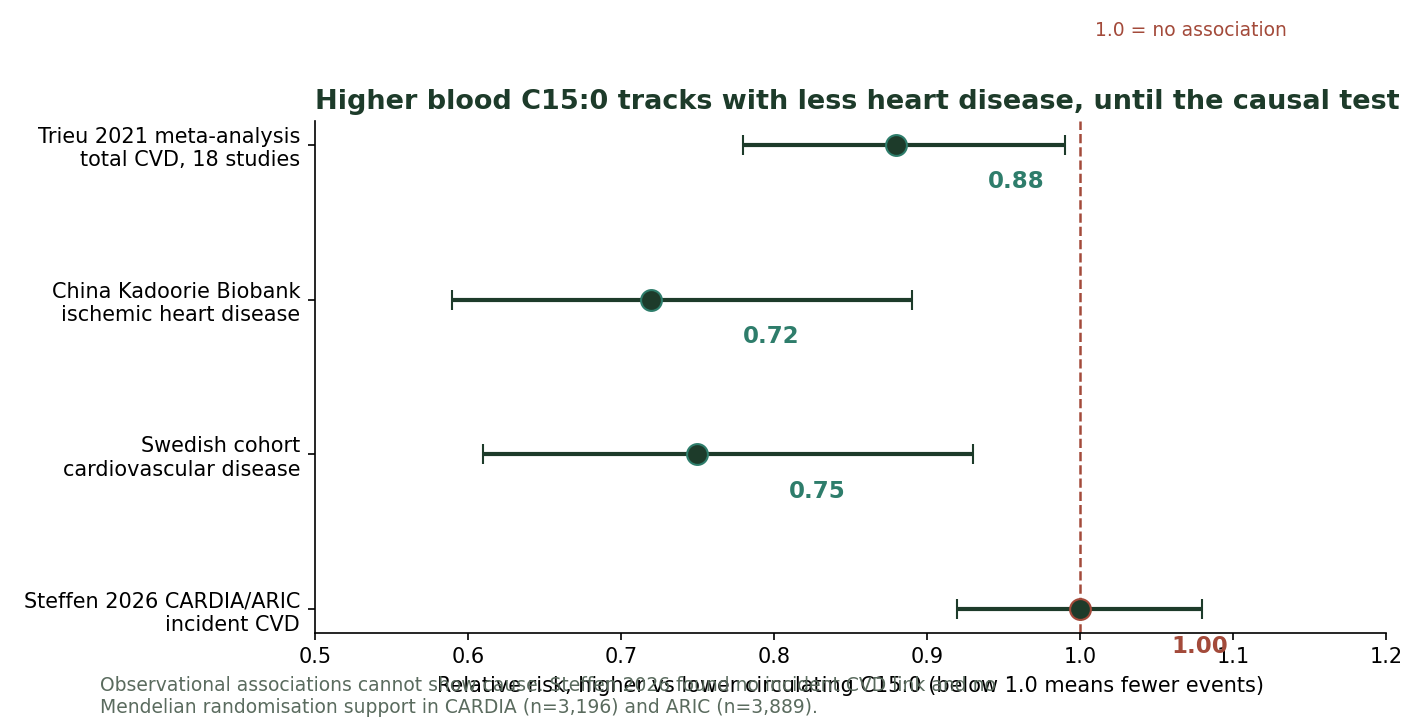
A 2021 meta-analysis in PLOS Medicine pooled 18 prospective studies and found that higher circulating C15:0 was linked to lower total cardiovascular disease, a relative risk of 0.88, and about 14 percent lower risk of type 2 diabetes. The EPIC-Norfolk study, a large UK cohort, found higher plasma C15:0 linked to lower incident coronary heart disease. The China Kadoorie Biobank, with 8,185 adults, found an ischemic heart disease risk of 0.72 for the top third versus the bottom third. A Swedish cohort of 4,150 people found a cardiovascular disease risk of 0.75 per interquintile range of serum C15:0.
A 2025 narrative review in the World Journal of Cardiology synthesized 115 studies and found a consistent pattern: people in the highest fifth of blood C15:0 had 12 to 25 percent fewer cardiovascular events than those in the lowest fifth.
That is a real, repeated pattern. It is also the kind of pattern that can mislead. People with high blood C15:0 tend to eat more full-fat dairy, and they differ from low-C15:0 people in income, diet quality, exercise and many other ways that studies can only partly adjust for. Blood C15:0 may be a marker of a healthy lifestyle, not the cause of it. The only way to tell is to test causality directly, and in 2026 someone finally did.
The 2026 plot twist: the causal test failed
In 2026, Steffen and colleagues published an analysis in Frontiers in Nutrition that tested the C15:0 heart-health claim directly. They measured plasma C15:0 in 3,196 participants in the CARDIA cohort, replicated it in 3,889 participants in the ARIC cohort, and ran Mendelian randomization, a genetic method that tests whether a biomarker actually causes an outcome rather than just tracking with it.
The results were a split verdict. Higher C15:0 tracked with modestly lower blood pressure and a lower 10-year risk of hypertension, a hazard ratio of 0.86. But C15:0 was not associated with incident cardiovascular disease in either cohort, was not associated with any heart ultrasound measure, and Mendelian randomization gave no evidence of a causal effect on blood pressure, resting heart rate or hypertension. The authors stated plainly that the collective evidence is not consistent with a causal cardiovascular benefit of C15:0.
This does not erase the earlier cohorts. It does change what they mean. An association that fails its first direct causal test is a contested association, not a settled benefit. The Trieu meta-analysis authors themselves called for work to establish causality, and Steffen 2026 is exactly that work. It is also worth noting that the Swedish cohort found mortality risk was lowest near the middle of the C15:0 range, not at the highest levels, which argues against a simple more-is-better story.
The ferroptosis idea, and what it would take to prove it
The most interesting part of the C15:0 story may be the mechanism, not the marketing. Ferroptosis is a form of cell death driven by iron and damaged fats in cell membranes. It is genuinely linked to aging and to diseases including type 2 diabetes, heart disease, liver disease and cognitive decline. If a dietary fat really did make membranes resistant to ferroptosis, that would be a meaningful finding.
The evidence for that mechanism is still preclinical. It comes from cell studies and from the dolphin work. No human study has shown that C15:0 supplementation reduces ferroptosis in people, improves a clinical outcome, or slows any marker of aging. The proposed deficiency threshold of 0.2 percent and the optimal range of 0.4 to 0.64 percent come from the same research group that sells the supplement. Independent groups have not validated those cutoffs, and there is no established test result that tells a person they need C15:0.
Price and value
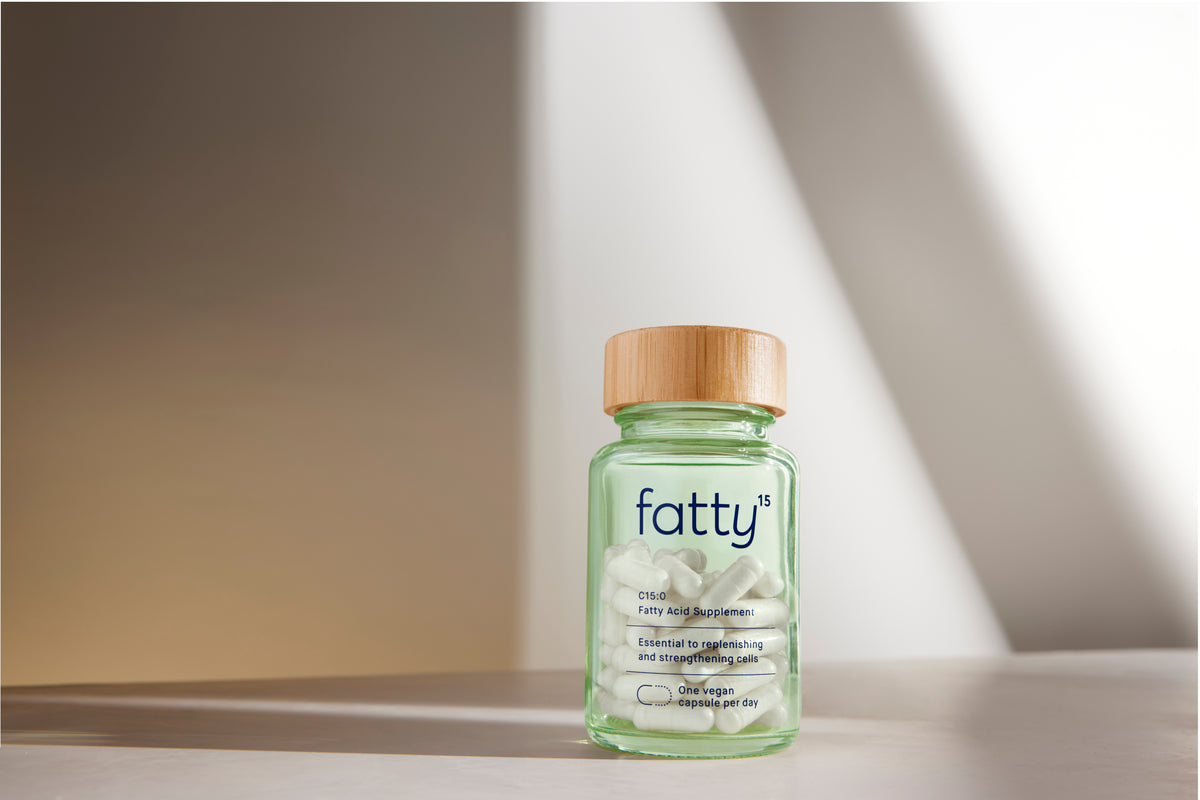
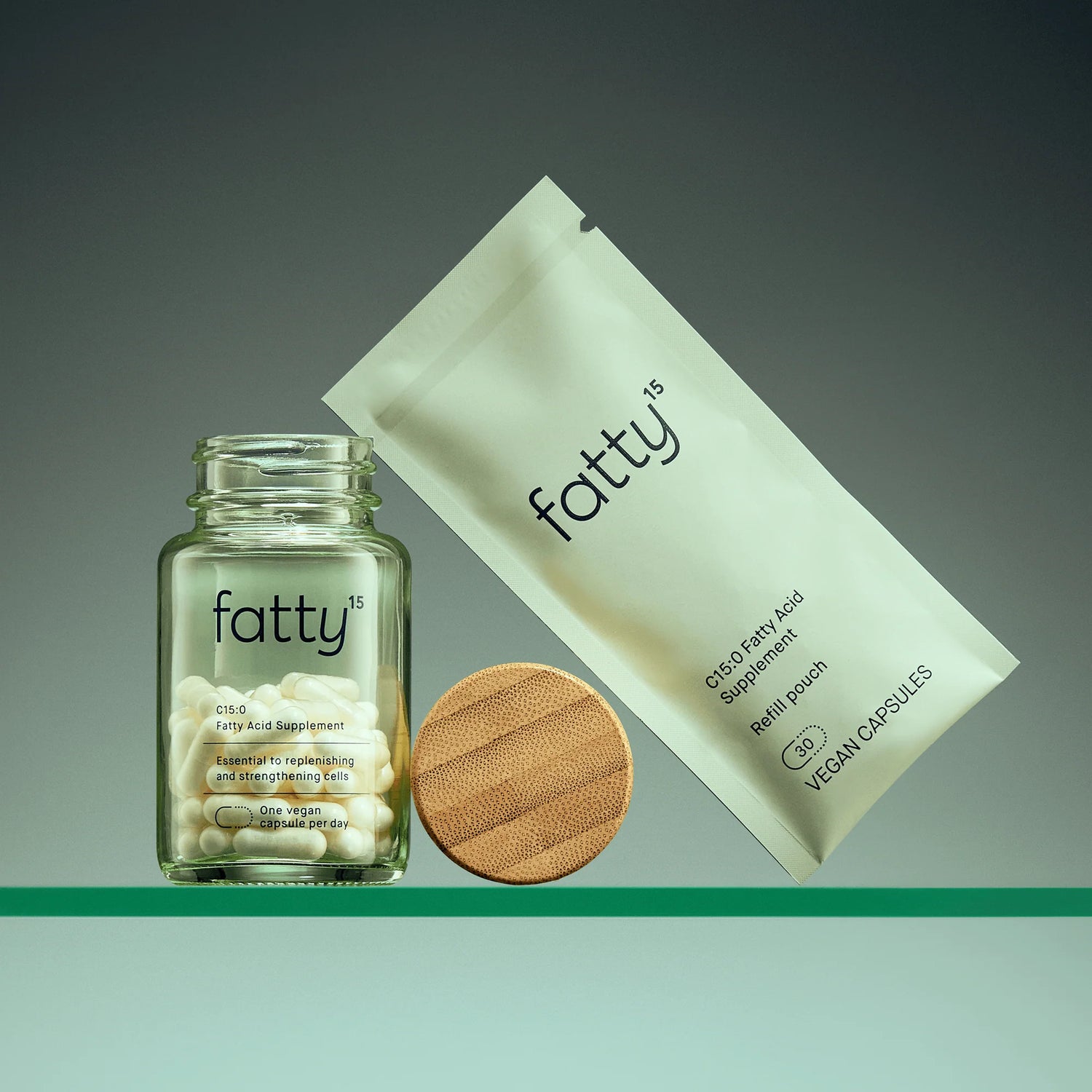
Fatty15 is the best known C15:0 supplement, sold by Seraphina Therapeutics. It is a once-daily vegan capsule with 100 mg of pure C15:0, the ingredient the company calls FA15. Prices listed on fatty15.com on Nov 19, 2026: a 30-day trial kit is $49.95, a 90-day starter kit subscription is $119.95, which works out to about $39.99 a month, a one-time 90-day kit is $149.95, and an annual supply is $459.95. The company says it has more than 130,000 subscribers, that every batch is independently tested, and that the ingredient is Generally Recognized as Safe.
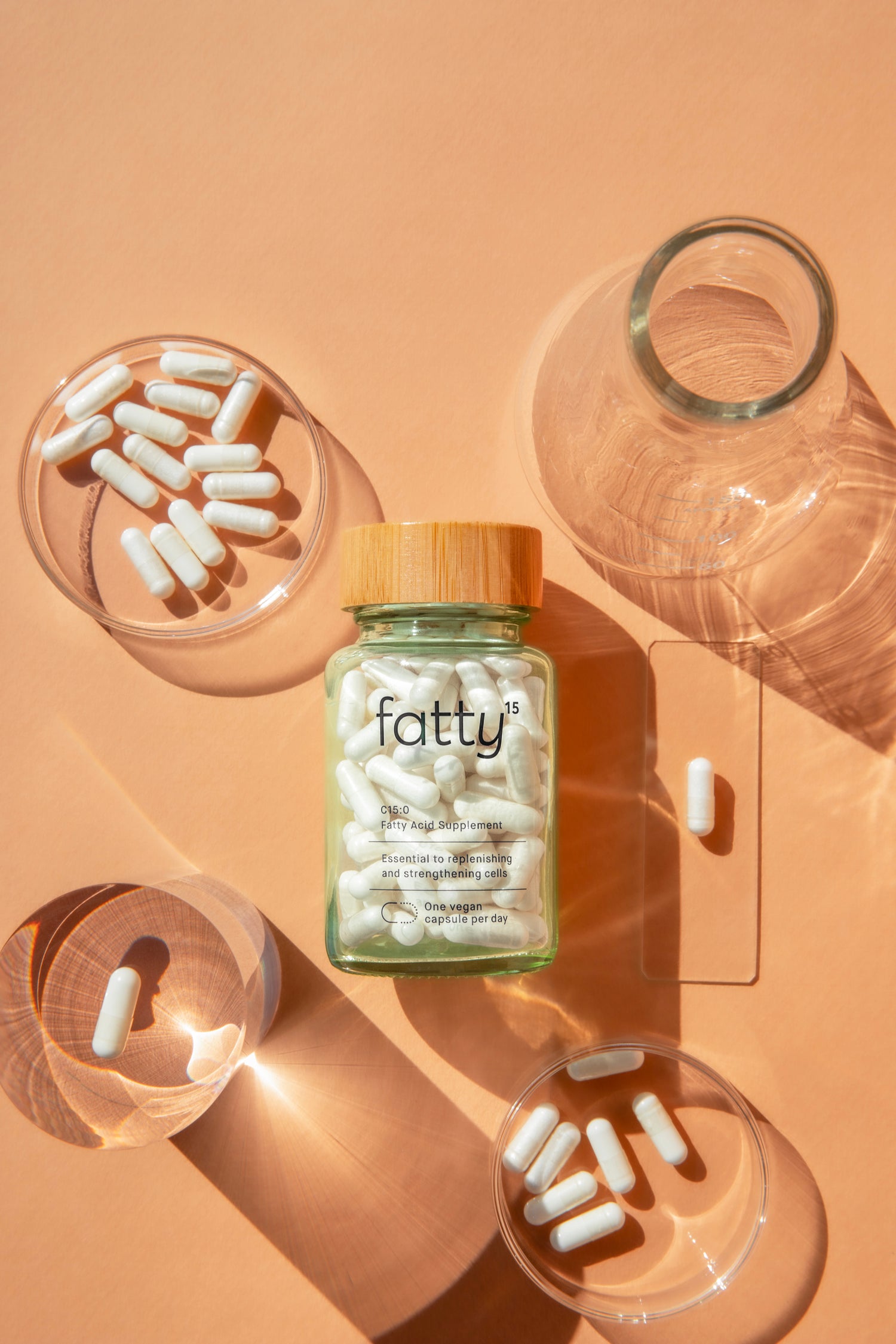
Two practical warnings. First, the 30-day trial kit auto-enrolls you into the 90-day subscription, with refills at $119.95 every 90 days, unless you cancel. Second, the dose in the trials was 200 to 300 mg a day, while fatty15 provides 100 mg a day. The only trial that raised blood levels reliably used twice the product dose. There is no Thrive Tools discount code for fatty15, and no affiliate link in this article, so there is no saving to claim here. If you are comparing longevity tools with verified offers, the discount codes page is the place to look.
Food is the cheaper route to C15:0, though an imprecise one. A serving of butter or whole milk contains C15:0 mixed with much larger amounts of other fats, including saturated fats that raise LDL cholesterol. Nobody has shown that eating more butter for C15:0 improves health, and the cohorts cannot separate the C15:0 from everything else in dairy.
Safety and limitations
No serious adverse events were reported in the 2 small published trials. That is reassuring as far as it goes, and it does not go far: 30 people for 12 weeks and 88 women for 12 weeks is a small safety base. There is no long-term safety data from large trials. One review noted a preclinical signal of maternal glucose intolerance, so anyone pregnant, breastfeeding, or planning a pregnancy should talk to a clinician first.
The limitations of the evidence are the story of this article, so here they are in one place. Nearly all primary C15:0 research comes from one group with a commercial interest in the result. The human trials are tiny, short, and show no clinical outcome. The population data is observational and has now failed its first causal test. The essential fatty acid claim is a proposal, not a consensus. There is no lifespan study in any mammal, no human longevity trial, and no validated deficiency test. C15:0 is not comparable to omega-3, which has decades of large trials behind it, including a Cochrane review of 162,796 people.
The bottom line
C15:0 is one of the most interesting unproven ideas in longevity science. The dolphin observation is real, the cell data is real, and the population pattern is real. But the chain from those findings to a pill that makes you live longer has 3 broken links: the human trials show no benefit, the causal test failed, and the essential fatty acid claim has not been accepted by any nutrition authority. If future trials, especially the ongoing trial in older adults, show a real outcome, this verdict changes. Until then, C15:0 belongs in the watch list, not the buy list. If you do try it, know what you are paying for: a well-made capsule of a real molecule with no proven health benefit, at about $40 a month on subscription. And if you want tools with verified offers behind them, start at the discount codes page.
FAQ
Is C15:0 really an essential fatty acid?
Not by any official standard. One research group proposed it in 2020, and a 2024 review called it a potential candidate that needs more evidence. No major nutrition body, including the National Academies, the European Food Safety Authority or the American Heart Association, recognizes C15:0 as essential. The last fatty acid recognized as essential was alpha-linolenic acid, omega-3, in 1929.
Does C15:0 help you live longer?
There is no evidence that it does. No lifespan study in any mammal has been completed, and no human trial has tested longevity or any disease outcome. The evidence is cell studies, population associations, and 2 small trials that only showed blood levels rising. Longevity claims for C15:0 run ahead of the data.
How much C15:0 is in fatty15?
One capsule contains 100 mg of pure C15:0, taken once a day. The published trials used 200 mg a day in young adults and 300 mg a day in women with fatty liver disease, so the product dose is half to a third of the trial doses.
Can I get C15:0 from food?
Yes. Dairy fat is the main source: butter, whole milk and cheese. Some fish and beef fat contain smaller amounts. But C15:0 in food comes mixed with other fats, and no study has shown that eating more dairy fat for C15:0 improves health. Blood C15:0 is also used by researchers as a marker of dairy fat intake.
Is C15:0 safe?
No serious adverse events appeared in the 2 small published trials, and the ingredient is Generally Recognized as Safe. But the safety data is thin: 118 people in total, for 12 weeks each. There is no long-term safety data from large trials, and anyone pregnant, breastfeeding, or taking medication should talk to a clinician first.
What is cellular fragility syndrome?
It is a deficiency syndrome proposed in a 2024 paper by Venn-Watson. The idea is that low C15:0 makes cell membranes fragile and vulnerable to ferroptosis, a form of iron-driven cell death, and that this accelerates aging in as many as 1 in 3 people. It is a hypothesis from one research group, not an established diagnosis, and no test for it has been independently validated.
This article is for general information only and is not medical advice. It reports on published studies and does not recommend any supplement, dose, or treatment.
Looking for tools that support healthy aging and recovery? Browse the current offers on our discount codes page. This article is for general information only and is not medical advice. It reports on a published study and does not recommend any supplement, dose, or treatment.